


The Presidential Anti-Corruption Commission (PACC) has found sufficient evidence that will pin down those responsible for the alleged technical smuggling of billions of pesos worth of steel billets and stainless steel by unscrupulous importers and brokers in collusion with corrupt personnel of the Bureau of Customs (BoC).
“(Our investigation is) ongoing and we found prima facie evidence to launch a deeper probe,” PACC Commissioner Manuelito Luna told Manila Times yesterday.
“There appears to be undervaluation in the import declarations.” according to Luna, PACC commissioner-in-charge of the probe.
He, however, refused to discuss specific details of the evidence on hand so as not to prejudice the investigation, saying they were gathering more information and sufficient leads before coming out with their findings. “The BoC top brass is very co-operative,” Luna said, adding, “I’ve my own way of unearthing the truth.”
He assured the public that “no stone will be left unturned,” saying the PACC would go after those importers and their conspirators, both inside and outside the Customs bureau.
Earlier, BoC spokesman and Assistant Commissioner Vincent Philip Maronilla said the agency’s leadership was working closely with the PACC and some documents were already provided to the commission for evaluation and investigation.
“This co-operation with the PACC is part of our continuous campaign against corruption, which is one of the priorities that Commissioner Rey Leonardo Guerrero has been emphasising since his assumption as Customs chief,” Maronilla added. The BoC, he said, is fully committed in complying with President Rodrigo Duterte’s order to stop corruption.
Maronilla said subpoenas were served against the Port of Manila and the Manila International Container Port for documents related to smuggling and unauthorised release of shipments.
Show-cause orders were issued against 119 Customs employees for non-compliance with existing BoC rules and regulations since Guerrero assumed the top Customs post.
Furthermore, 23 administrative and 25 criminal complaints were filed against errant Customs personnel. Maronilla told this newspaper earlier that four to five big steel companies were under post-clearance audit to determine if the duties and taxes they paid were in order.
He said errant importers might be held liable to pay penalties and charges ranging from 125% to 600% of the revenue loss arising from negligent or fraudulent declarations.
“This is industry-wide. We are auditing at present four to five steel companies but there will be more as we go on,” Maronilla added.
Proliferation sub-standard steel across the country has been documented by concerned groups.
It was found out that the sub-standard steel was being used in various constructions such as rebuilding of collapsed residential and commercial buildings in the typhoon-devastated provinces of Leyte and Samar.
The Philippine Iron and Steel Institute (PISI), the umbrella organisation for the local steel industry, has reported to the Department of Trade and Industry-Consumer Protection Group that a test-buy in typhoon-affected areas in Leyte and Samar confirmed that sub-standard steel was being sold in several hardware stores.
The PISI revealed that “sub-standard and uncertified steel bars” were used in the buildings that were damaged during the 2013 Cebu and Bohol earthquakes.
Welfare advocacy group National Coalition of Filipino Consumers also aired a similar concern, saying sub-standard products could inflict long-term negative impact on the country’s infrastructure and construction sector.
It pointed out that the Philippines is located in an earthquake and typhoon zone, or the so-called Asia’s Ring of Fire, making it one of the most disaster-prone countries in the world.
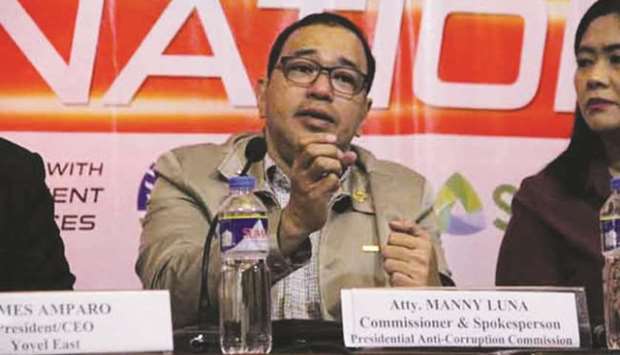
Presidential Anti-Corruption Commission spokesman and commissioner Manuelito Luna.