


The House Committee on Justice yesterday launched its deliberation on bills seeking to reinstate death penalty on heinous crimes in the country.
At least 11 House bills are pending under the justice panel, all seeking to repeal Republic Act 9346 or the law prohibiting the imposition of death penalty and to impose higher penalties to designate death by legal injection among other penal laws.
Among these measures are House Bill (HB) 1380 filed by Capiz Second District Rep. Fredenil Castro, which seeks to highlight the imposition of death penalty on drug-related crimes, with the execution ranging from hanging, through a firing squad or through lethal injection under the authority of the Bureau of Corrections director.
HB 1588, filed by Minority Leader Bienvenido Abante Jr, a pastor and a self-proclaimed “life” advocate, seeks the same methods of execution of death sentence, but prefers carrying them out in a public place except for lethal injection.
Witnesses may include the media and children nine years old and above who are accompanied by their parents or guardians.
Abante justified the imposition of death penalty by citing religious verses in his explanatory note.
“If God did not see death penalty as a deterrent, if He did not consider death penalty as right for the good of men and society, He would not have instituted it. If God saw it right, who is man to consider it otherwise?” a portion of Abante’s explanatory note read.
“Because sentence against an evil work is not executed speedily, therefore the heart of the sons of men is fully set in them to do evil,” the lawmaker said, quoting from the scriptures.
Sarangani Rep. Rogelio Pacquiao, the brother of evangelical Sen. Emmanuel Pacquiao who is a known death penalty advocate himself, also filed House bills imposing the death penalty, focusing on the heinous crime of kidnapping and illegal detention, drug use and rape under HBs 1800, 1806 and 1807, respectively.
Meanwhile, Muntinlupa City Rep. Rozzano Biazon zeroed in on the imposition of capital punishment on illegal drug traffickers and their cohorts.
“There have been instances where the convicted trafficker continues to deal in the illegal drug trade even behind bars. They continue to profit from the misery of others, to the detriment of society, under a very secure base of operations — our prisons,” Biazon said.
His stand was opposed by representatives from different government agencies, who sat as resource persons in the panel.
Domingo Cayosa, president of the Integrated Bar of the Philippines, noted that the death penalty is not a “reformatory approach” to penology, citing the failure of the Duterte administration’s anti-drug campaign.
“There are certain deaths, instantaneous deaths that have happened, but these have not completely eradicated the drug problem. The death penalty may not be the best deterrent to the drug problem and other heinous crimes,” Cayosa said.
“But there are better deterrents to criminality than death penalty and that is swift justice,” he added.
Commission on Human Rights (CHR) Commissioner Karen Gomez Dumpit, on the other hand, also noted that not all victims of those who committed heinous crimes are for the death penalty.
“Yearning to stop the use of illegal drugs is understandable, but to fight with revenge as motivation will only perpetuate the culture of violence,” she said.
The House-approved measure seeking the revival of capital punishment has failed to hurdle 17th Congress as senators were quick to reject the imposition of death penalty at the time.
President Rodrigo Duterte took office and carried out the drug war in 2016, leading to at least 5,300 deaths of drug suspects, who allegedly fought back during anti-narcotic operations.
But reports of rights groups including the CHR show that the death toll had risen to at least 27,000 as of this year.
The House panel has suspended its deliberation and will continue to tackle the death penalty at a later date.
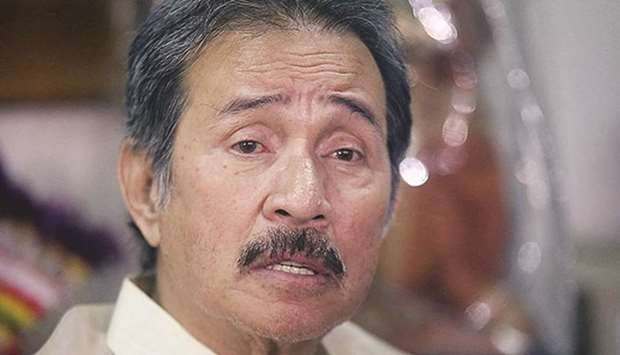
Castro: seeking strong action