


European partners yesterday warned Boris Johnson that his hardline Brexit stance was putting the UK on a “collision course” with the EU and called on the new British premier to avoid “provocations”.
Johnson plans to meet French President Emmanuel Macron and German Chancellor Angela Merkel in the next few weeks, officials said yesterday, as the premier insists he will renegotiate the UK’s divorce accord with the European Union.
Macron, who has said he is happy to be considered the “bad guy” in the Brexit negotiations, is set to be a key figure during the tricky and potentially bad-tempered talks in the months ahead.
He extended the invitation to Johnson in a call late Thursday from his official summer vacation residence in the south of France, where he is expected to stay for the next three weeks, said an aide.
But in a sign of wariness about Johnson’s anti-EU rhetoric, France’s Europe Minister Amelie de Montchalin urged Britain’s new leader to create a working relationship with his partners on the continent.
“From our side, we need to be responsible,” she told France 2 television. “That means being clear, predictable and it means on the other side that we need to create a working relationship, that there aren’t games, posturing, provocations.”
The timing of the meeting between Macron and Johnson was unclear.
The British prime minister is due in France to attend the G7 meeting of developed nations in Biarritz on August 24-26.
“In any case, we want to work with him... and we need to,” Montchalin said.
Ireland’s foreign minister was also quoted as saying yesterday that Johnson has deliberately set Britain on a “collision course” with the EU over Brexit negotiations.
“He seems to have made a deliberate decision to set Britain on a collision course with the European Union and with Ireland in relation to the Brexit negotiations,” Simon Coveney was quoted by Irish state broadcaster RTE as saying in Belfast.
In his maiden parliamentary speech as prime minister on Thursday Johnson promised to press ahead with plans to reopen the deal agreed with the EU — despite firm pushback from other EU leaders.
Merkel’s office said Johnson had accepted an invitation from the 65-year-old German chancellor for “an early visit” to Berlin. No date was given.
Merkel “congratulated” Johnson by phone yesterday and “the main topics were Britain’s withdrawal from the European Union and deepening of bilateral relations,” said a spokeswoman.
Last year, Macron broke away from his time off to host then prime minister Theresa May as she sought new concessions in her ultimately doomed bid to bring Britain out of the European Union.
In their conversation, Macron congratulated Johnson on becoming prime minister and emphasised his desire for close Franco-British ties, the presidential official said, reflecting his hope for a strong defence and economic relationship post-Brexit.
But they largely steered clear of the vexed subject of Britain’s departure from the bloc, the aide added, agreeing that the issue would be discussed in more detail in the next few weeks.
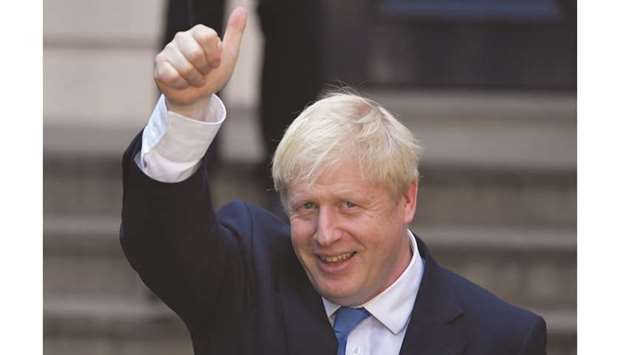
Boris Johnson