


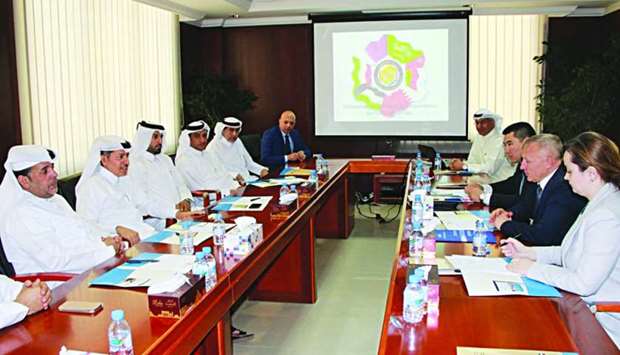
Doha hosted a meeting of GCC states and Central Asian nations to explore ways to combat the drugs menace and related issues.
The meeting also addressed the issue of smuggling of Afghan opium into the Arabian Gulf region and combating the financing of terrorism and money-laundering stemming from illicit drug trafficking.
The meeting was chaired by the Director Criminal Information Centre For Drug Control Co-operation Council For The Arab Gulf States, Brigadier Saqr Rashid al-Muraikhi, and the Director of the Central Asian Regional Information Co-ordination Centre for Combating Illicit Trafficking in Narcotic Drugs, Psychotropic Substances and their Precursors (CARICC) Pustovitov GB.
Following the meeting, Brigadier al-Muraikhi said in a statement that the visit by the Director of CARICC to Doha comes within the framework of the organisation's work to strengthen and activate regional and international co-operation with counterpart organisations and centres, exchange experiences and discuss the developments in the field of drug control and efforts made to combat this scourge.
He said that this visit also reflects the importance Centre in the field of drug control, noting that that the two centers will exchange important information related to combating illegal drug trafficking during the visit.
Brigadier al-Muraikhi said that the co-operation of the Centre with the regional and international organisations is an important addition to opening new horizons for the exchange of experiences in combating illicit trafficking in narcotic drugs and psychotropic substances.
He pointed to the similarity between the two centres in the way they work through the presence of contact officers from each member state, as well as the way of exchanging information through the security channels, in addition to the similarity of competencies and convergence between the two centres.
For his part, Pustovitov GB expressed his pleasure at visiting the Criminal Information Centre for Drug Control in Doha, stressing the importance of further fruitful cooperation between the two centres.
He said that CARICC signed several MoUs with several regional and international organisations that can provide information support and scientific and practical support to the centre.
He said that they are pleased to cooperate with centre for the benefit from the accumulated experience in the field of combating illicit trafficking in narcotics, psychotropic substances and precursor chemicals, as well as intelligence in this area.
CARICC is formed of Azerbaijan, Kazakhstan, Kyrgyzstan, Tajikistan, Turkmenistan and the Russian Federation, in addition to the United Nations Office on Drugs and Crime (UNODC), based in Almaty, Kazakhstan.