


MTN Group’s biggest shareholder is pushing for changes at Africa’s largest mobile-phone company to avoid the regulatory, legal and political disputes that have cut its share price by more than half over the past four years.
The Public Investment Corp built a 26% stake in Johannesburg-based MTN by late November and used that to call for the replacement of chairman Phuthuma Nhleko, people familiar with the matter said. Africa’s biggest fund manager, which is South African state owned, also sent a letter to MTN demanding a board reorganisation, said one of the peoples. That resulted in the appointment of more politically connected directors.
Last month, the carrier obliged, announcing Nhleko’s planned departure and replacement, along with other director changes and a new separate group of prominent advisers. The PIC didn’t respond to a request for comment. Nhleko declined to comment.
Interactions with the PIC have been at the board level, MTN chief executive officer Rob Shuter said in an interview last week in London, where he was giving presentations to investors.
“An important thing for them was on our board evolution,” he said when asked about the company’s relationship and discussions with the PIC, without commenting on the specific changes on the board. MTN’s media office didn’t comment further.
The PIC was moved to act following a series of disputes in Nigeria, Iran and elsewhere, the people said, asking not to be identified as the concerns weren’t disclosed publicly. The biggest of those was a $5.2bn fine in Nigeria in October 2015, which was eventually settled for less than $1bn after about eight months of negotiations.
The PIC, which manages the pension funds of South African government workers, wants the new chairman, former South African Deputy Finance Minister Mcebisi Jonas, and the board to resolve outstanding issues such as a $2bn tax dispute in Nigeria, the people said. MTN’s separate advisory board is a council of “wise old men,” who can directly contact lawmakers and decision makers in the countries where MTN operates, one of the peoples said.
The current board doesn’t have a Nigerian director even though that country is MTN’s biggest market by subscribers. From July, it will include Lamido Sanusi, a former Nigerian central bank governor who is now Emir of Kano, the second-most influential Islamic position in the West African country.
Jonas is set to take over as chairman in December, MTN said on May 3. Vincent Rague, a Kenyan International Finance Corp veteran, is also joining.
The advisory board will be chaired by Thabo Mbeki, a former South African president who has mediated in a number of political disputes across the continent, and will include a former Ghanaian president, John Kufuor, and Mohamed Elbaradei, the one-time head of the International Atomic Energy Agency.
Nhleko, who is credited with playing a large part in building the company into a continent-wide giant with 221mn customers, will also sit on the advisory board.
A catalogue of disputes in MTN’s markets, which include nations at war in the Middle East and Africa, have depressed the share price and allowed Johannesburg-based rival Vodacom Group Ltd to surpass MTN in terms of market capitalisation. Since MTN disclosed that the PIC had a 26% stake on November 29 the share price has gained 18% compared with a 6% decline for Vodacom. MTN’s stock fell 1.7% to 102.99 rand yesterday.
Disputes include: October 2015: MTN fined $5.2bn by a Nigerian regulator for not disconnecting 5.1mn subscribers that didn’t have proper documentation. While the penalty was eventually reduced to less than $1bn it cost then-CEO Sifiso Dabengwa his job. The PIC, which held 13% of the company at the time, said the board should have taken more responsibility.
August 2018: Nigeria orders MTN and four banks to refund $8bn in dividends that it said were illegally expatriated in the eight years through 2015.
The company ended up agreeing to pay $52.6mn four months later.
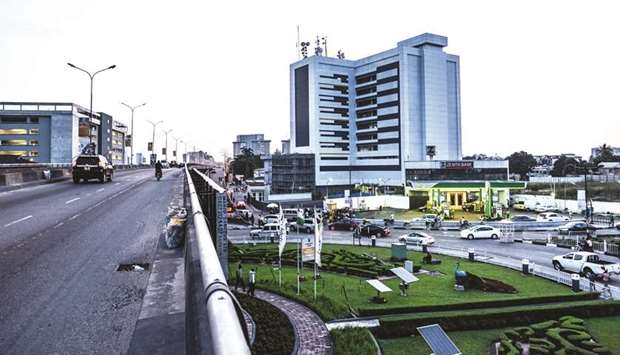
The headquarters of MTN Group Nigeria at Golden Plaza in Lagos. MTN’s biggest shareholder is pushing for changes at Africa’s largest mobile-phone company to avoid the regulatory, legal and political disputes that have cut its share price by more than half over the past four years.