


The top 10 energy companies are planning investments approaching $1tn by 2030, in everything from finding and tapping new fields to equipment ranging from drones to drilling rigs. If the oil and gas business rolls along as it has for the past century, those projects will likely pay off in fat profits for shareholders. But some analysts and investors warn that the value of much of that infrastructure risks falling to zero.
If governments make good on tough targets for cutting greenhouse gas emissions, consumption of carbon-based fuels will fall, and prices would soon follow. The viability of hard-to-reach developments such as deep-sea sites would drop even more rapidly—becoming what some are calling “stranded assets.” The basic idea is that it makes no sense to spend $40 extracting a barrel of oil you can sell for only $35. Which would mean a lot of investment will have been wasted.
“The industry needs to be planning for lower prices, and it’s not at all clear that’s happening,” says Natasha Landell-Mills, a fund manager at Sarasin & Partners in London. She says big oil companies assume a price of about $75 a barrel when assessing the value of their infrastructure, yet crude has averaged $62 over the past five years.
Facing growing pressure for change, oil companies, automakers, and consumer-product manufacturers have said they’ll fund a campaign advocating a US tax on carbon dioxide emissions.
But under proposals that would limit temperature increases to 2C (3.6F) — which the United Nations says is necessary to avoid the worst effects of climate change — taxes and restrictions aimed at encouraging a shift to electric cars and away from coal-fired power plants could hammer sales of fossil fuels. A drop in consumption of coal, oil, and gas would have knock-on effects felt throughout the global economy, potentially spurring a decline in the value of companies sitting on stranded assets.
About a third of the almost $5tn in planned fossil fuel capital investment from 2018 to 2025 risks being rendered near-worthless under policies that achieve the 2C target, according to Carbon Tracker, an environmental group that advises institutional investors. It coined the term “stranded asset,” not to argue against such policies, but to get financial markets to consider the economic risks of climate change.
The key to action is policies that prod investors and executives to change the status quo, says Sasja Beslik, head of sustainability at Nordea Asset Management. “We need to get this to work for the short term,” Beslik said at a May investment conference in London. “The more we talk about the long term, the more we continue doing exactly what we’ve been doing.”
With faster action to address climate change, fewer companies would invest in what would become stranded assets. A delay would mean more money spent on projects that turn out to be unnecessary, and meeting the goal would require more urgent and more costly measures—and not only for energy companies. Implementing the needed measures today would cost the globe’s 30,000 biggest companies $4.3tn over the next 15 years, but waiting another decade to impose stricter limits on carbon output would boost that to $5.4tn, according to the UN Environment Program Finance Initiative, a collaboration with institutional investors.
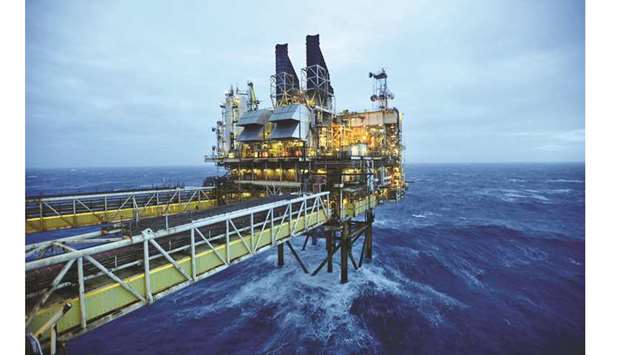
A general view of a section of the BP ETAP (Eastern Trough Area Project) oil platform in the North Sea, around 100 miles east of Aberdeen, Scotland (file). About a third of the almost $5tn in planned fossil fuel capital investment from 2018 to 2025 risks being rendered near-worthless under policies that achieve the 2C target, according to Carbon Tracker, an environmental group that advises institutional investors.