


Bayer AG was ordered to pay more than $2bn in damages to a California couple that claimed they got cancer as a result of using its Roundup weed-killer for about three decades, raising pressure on the company to settle thousands of similar lawsuits.
It’s the largest jury award in the US so far this year and the eighth-largest ever in a product-defect claim, according to data compiled by Bloomberg. The verdict prompted some analysts to boost their estimates on the value of a settlement.
Bayer is slumping after a dressing down in the courtroom.
Bayer’s third Roundup court loss comes two weeks after shareholders disavowed chief executive officer Werner Baumann at a meeting in Germany, lambasting his handling of the $63bn Monsanto Co acquisition. The verdict puts the onus on Bayer to alter its defence course and consider a settlement: litigation concerns have eroded Bayer’s value by more than 40% since the deal was sealed in June.
Analysts at Bloomberg Intelligence raised their estimate for a settlement value to as much as $10bn, up from a peak of $6bn.
“The company has got to come to the table with a viable plan to resolve these cases, or the losses are going to mount,” Micah Dortch, managing partner at the Potts Law Firm in Dallas who has filed dozens of Roundup cases, said by email.
“This outcome should make Monsanto realise the seriousness of these claims and how a jury perceives the evidence.”
Bayer vowed to challenge Monday’s ruling, calling it “excessive and unjustifiable.” Bayer has defended the safety of Roundup’s active ingredient glyphosate since inheriting the product from Monsanto.
The verdict “conflicts directly with the US Environmental Protection Agency’s interim registration review decision released just last month,” Bayer said. “The consensus among leading health regulators worldwide that glyphosate-based products can be used safely and that glyphosate is not carcinogenic.”
A jury in state court in Oakland, California, issued the verdict after two other California trials over the herbicide yielded combined damages of $159mn against the German company. Bayer is scheduled to defend against similar claims this summer in St Louis.
When the company’s lawyer asked a juror after the verdict what the panel wanted to hear from Bayer, the juror responded that he wanted proof the chemical was safe: “I wanted you to get up and drink it.” The juror declined to be identified.
The jurors agreed that Alva and Alberta Pilliod’s exposure to Roundup used for residential landscaping was a “substantial factor” in their non-Hodgkin’s lymphoma. In addition to $1bn for each spouse, the jury awarded damages of about $55mn for the couple’s medical bills and pain and suffering.
The verdict will be vulnerable to a legal challenge by Bayer because courts have generally held that punitive damages shouldn’t be more than 10 times higher than compensatory damages.
Monsanto is the named defendant in similar US lawsuits filed by at least 13,400 plaintiffs.
“The verdict in this trial has no impact on future cases and trials, as each one has its own factual and legal circumstances,” Bayer said.
“Near-term sentiment is terrible,” Peter Verdult and Andrew Baum of Citigroup wrote in a note to clients. The legal risks priced into the stock have reached about €30bn, they said.
Markus Mayer, an analyst at Baader Bank AG, said the ruling increases the probability that Bayer becomes vulnerable to a takeover or a target for more activist investors like Paul Singer’s Elliott Management Corp pushing for a split between agriculture and health assets.
While it was a “risky move” to ask for an award of more than $1bn — and the damages will probably be reduced by the judge — the three verdicts against Bayer show jurors are convinced by evidence against the company, said Anna Pavlik, senior counsel for special situations at United First Partners LLC in New York.
“There appeared to be more detailed evidence damaging to Monsanto, which strengthens plaintiffs’ cases down the pipeline even further,” said Pavlik, who has followed the trials.
The Pilliods’ lawyer urged jurors to punish the company for covering up the health risks of the herbicide for decades. Brent Wisner told the panel his punitive damages request was roughly based on the gross profit of $892mn recorded in 2017 by Monsanto’s agricultural-chemicals division.
After the verdict, the attorney said the evidence showed that “from day one, Monsanto has never had any interest in finding out whether Roundup is safe.”
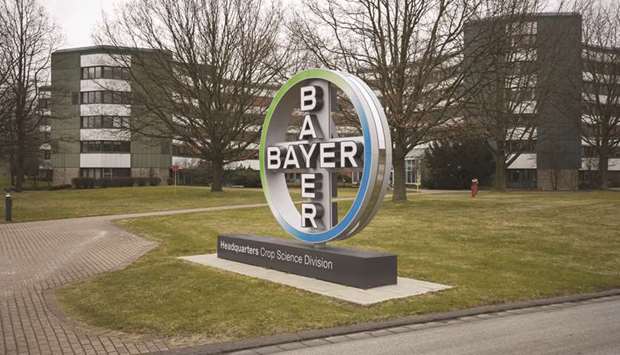
A logo stands outside Bayer CropScience facility in Monheim, Germany. Bayer’s third Roundup court loss comes two weeks after shareholders disavowed chief executive officer Werner Baumann at a meeting in Germany, lambasting his handling of the $63bn Monsanto Co acquisition.