


An opera singer who was asked to change her EU-themed dress for a concert at the Royal Albert Hall, in London, has described her choice of attire as a “subtle nod” to Europe at a time when she and other musicians fear for their livelihoods.
The British soprano Anna Patalong donned the yellow-and-blue outfit, along with a necklace of gold stars redolent of the EU flag, for a Classical Spectacular performance on Saturday after taking part in the anti-Brexit march in London earlier in the day.
However, she changed back into a red dress worn for previous performances for Sunday’s concert following a request by the concert’s producer, Raymond Gubbay. The company received one complaint about the dress from a member of the public but insisted this had not influenced their request for her not to wear the dress again.
“It’s a difficult time for the musical community because free movement is essential for us to carry out our jobs. It’s an industry where many of us work contract by contract so everyone is really quite worried about what will happen,” the British soprano told the Guardian.
“A lot of musicians also work abroad on contracts in Germany, for example, and didn’t get a say in the referendum.”
Patalong, whose surname comes from Polish ancestors who settled in Britain following World War II, added: “I feel European as well as British, and always will, but it’s going to be a very strange time because obviously my whole life has been part of the EU. I don’t know any different.”
Classical Spectacular, described on the Royal Albert Hall’s website as “the most popular classical music show in the UK”, has been running for more than three decades and has been likened to the Last Night of the Proms for its flag-waving atmosphere. It features classical favourites such as Land of Hope and Glory, Rule Britannia! and the 1812 Overture, complete with cannons and indoor fireworks.
The controversy came to light on Monday after her husband, the baritone Benedict Nelson, said on Twitter she had been asked to change her dress “as the colours were too provocative”.
Referring also to what he said was an incident in which a man was “ejected” from the Royal Opera House for wearing a pro-EU T-shirt, he added: “Two artistic venues people. Anyone who knows their history knows what that sounds like.”
Both Patalong and Nelson stressed there had been no disagreement with Raymond Gubbay, and she said she had been happy to comply with a requirement to wear a union flag-themed dress for a part of the concert.
“Everyone was very happy. There was no dissent, or boos from the audience and in fact I don’t think that you could see the details on the dress beyond the orchestra pit. I have received personal message from members of the choir and the orchestra, who could see, and they have said that they were very happy that I could make that gesture,” she added.
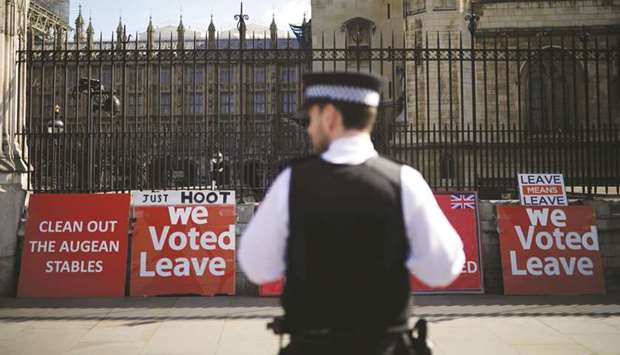
Pro-Brexit placards are pictured outside the Houses of Parliament in London yesterday.