


Indonesia raised 21.1tn rupiah ($1.5bn) from the sale of Islamic rupiah bonds to retail investors, a sign of growing demand for Shariah compliant investment products in the world’s largest Muslim-majority country.
The amount raised from the three-year notes was more than double the 10tn rupiah target and the highest from retail sukuk bond sale since February 2016, according to data from the Finance Ministry’s debt management office. The ministry set a return rate of 8.05% on the bonds to be paid out annually.
Southeast Asia’s largest economy, a regular borrower in the global market, is working to reduce foreign ownership of its securities after investors dumped the nation’s assets amid an emerging-market sell-off last year.
The government will double the sale of conventional bonds and sukuk to retail buyers to 10 times this year to reduce the share of multilateral and bilateral loans in meeting the budget gap, according to the finance ministry.
The government has set a gross bond issuance target of 825.7tn rupiah this year as it seeks to bridge a budget deficit forecast at 1.84% of the gross domestic product
Women made up a majority of the buyers at 56.4% and 50.5% of the total orders. The sale attracted 35,026 investors with the majority of them investing between 100mn rupiah to 500mn rupiah, the ministry said.
The money raised through sukuk sale will be used for funding various infrastructure projects, which will be undertaken by various ministries.
The government aims to raise 60tn rupiah to 80tn rupiah from the sale of conventional and sukuk bonds to retail investors this year, said Riko Amir, director of strategy and financing portfolio at the Finance Ministry. Plans for retail bond and sukuk sale will remain as planned, he said.
“This is part of our efforts to deepen domestic financial market and get the public to invest in sovereign bonds,” Amir said.
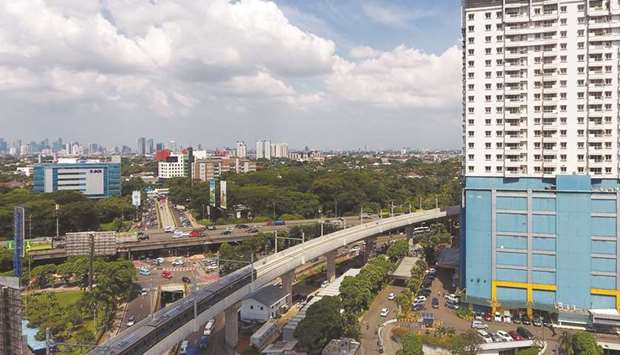
A Jakarta Mass Rapid Transit (MRT) train travels along an elevated track in this aerial photograph taken in Jakarta (file). The money raised through sukuk sale will used for funding infrastructure projects, which will be undertaken by various ministries.