
Leaders of the 1986 EDSA ‘People Power’ revolt expressed belief that the historic uprising will not be repeated under the administration of President Rodrigo Duterte even as they said much remains to be done to really carry out the promise of EDSA.
Christian Monsod, one of the framers of the 1987 Constitution, said the people had learned their lessons from past presidents, including Corazon “Cory” Aquino and her son, Benigno Aquino 3rd, who failed to deliver on their aspirations for change.
“I don’t think there will be another ‘People Power’ revolt. They (people) were just used. The elitists continue to rule politics. They are all establishment,” Monsod said in a panel interview during a live test broadcast with Manila Times TV.
The sad lesson from EDSA, he pointed out, was among the reasons why people pin their hopes for change on President Rodrigo Duterte.
“When asked if they will still march to EDSA, they said no more. EDSA now lives in our communities, not in the streets anymore,” Monsod said.
While there were improvements after EDSA, he added, there still was much to be done.
“We have democracy, though imperfect, in electing officials because the people really don’t have so many choices.” “One thing done was with our millennials because the millennials of today are more sensitive to what is happening and have deeper concern for the future, unlike in our time,” he said.
Monsod noted that framers of the Constitution underestimated the greed of politicians and overestimated the spirit of EDSA. “There’s still poverty and growing inequality,” he said.
“Those of us who have part in government are also partly to blame because we failed to accomplish our promise of real change. The problem is not the Constitution, but the Constitution was not fully implemented from Cory Aquino to today; everybody has accountability,” he said. He added that criminality, traffic congestion, and corruption remain.
Farmers, he said, see Duterte as an “angel of change,” which was why the president’s ratings are still high, though the people oppose alleged extra-judicial killings.
Duterte, he said, had accomplished things that his predecessors had not.
“I must say that there are pieces of legislation today that the past administrations had not done such as on national health care and land use, among others. This (Duterte) administration has done a lot,” Monsod added.
Monsod explained that the federal Constitution drafted by then-Chief Justice Renato Puno granted Duterte absolute powers, even as he said they would not be used by the president to perpetrate himself in power but to “escape accountability” after his term in 2022.
“If you help the poor and elevate their way of life, the poor will protect the president on his accountability. They are the ones who will protect (him),” Monsod added.
Former Navy captain Prospero Maligalig, a key member of the Reform the Armed Forces Movement (RAM), agreed with Monsod that the people had realised that they were just being used by vested interests.
In RAM’s peace talks with the government, he said they presented 136 talking points but only one materialised — the party-list system.
The “Build, Build, Build” (infrastructure) programme under Duterte is a step in the right direction. Duterte is doing the right thing,” Maligalig said.
Meanwhile, veteran journalist Ramon Tulfo said former senator Juan Ponce Enrile should have accepted the offer to run the revolutionary government after the overthrow of the Marcos regime in 1986 through the ‘People Power’ revolt. Tulfo, a columnist of Manila Times and one of the panellists in the TMT TV EDSA forum, made the remark after another panellist, Efren Villasenor, said they had thought then-president Aquino would help them recover the coconut levy fund. “Nothing happened because Aquino doesn’t know anything. We had trusted her,” Villasenor said. Dean Amado Valdez, former chairman of the Social Security System, said when the Marcos regime was toppled, the country was transformed from an “irresponsible dictatorship” to an “irresponsible democracy.”
“Had Enrile accepted the offer to take over, I think the government would have run smoothly because Aquino did not know anything,” Tulfo said.
“The power was already there to take. Enrile was not power hungry. What a waste. He didn’t seize the moment,” he added.
“One factor was that, I think the US was behind Cory and even if (Enrile) wanted to become aggressive, he could not have grabbed it (power) because there was the US military power to contend with,” Valdez said.
Enrile had said that the plan after the EDSA revolt was to form a revolutionary council that would be headed by him.
International / ASEAN/Philippines
Constitution expert hopes ‘People Power’ revolt will not be repeated


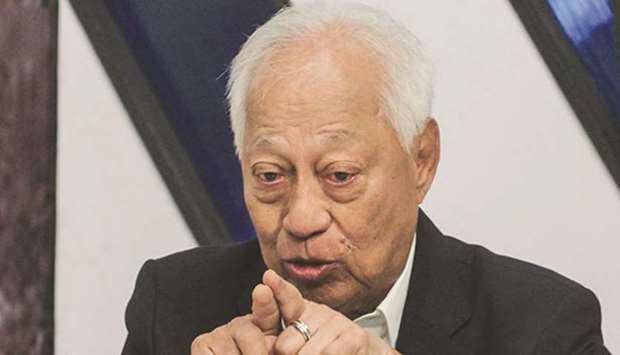
Christian Monsod: concern over inequality and poverty