


Tunisia’s central bank governor said yesterday the dinar currency could not be easily supported as international reserves go below three months of imports.
Tunisia’s economy has been in crisis since the toppling of autocrat Zine El Abidine Ben Ali in 2011, with unemployment and inflation shooting up.
It has struggled with tough economic reforms to reduce public spending.
Central bank chief Marouane El Abassi said foreign currency reserves’ cover had fallen to 84 days of imports due to lower phosphate production and a large energy sector deficit.
The dinar hit a record low earlier this month against the euro as a worsening trade deficit and lower overseas remittances eroded reserves.
It was at 3.53 against the euro and 3.11 against the dollar yesterday, according to traders. The dinar fell about 13% versus the euro and 8.6% against the dollar in 2018.
Tunisia’s trade deficit widened in December 2018 to a record 19bn dinars.
“Today, we have a huge energy deficit of up to 5bn dinars and production fall in vital sectors such as phosphates, in addition to a decline in tourism revenues by half compared to 2010, for example,” Abassi told parliament.
“What do we have to do? If we defend the dinar, the stock of the currency will fall further”, he added.
Production of phosphates, a major foreign revenue source, declined in 2018 to about 3mn tonnes compared to 8.2mn in 2010.
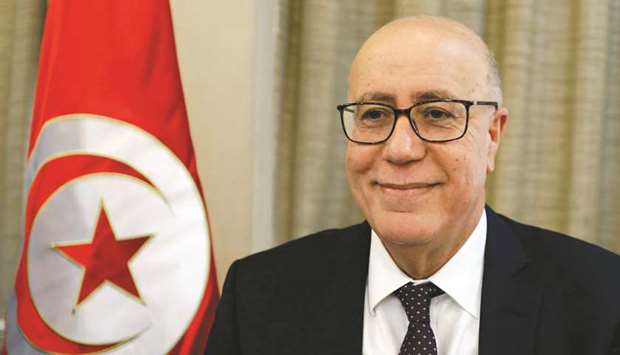
Tunisia’s central bank governor Marouane El Abassi attends a news conference in Tunis on February 20. The country’s foreign currency reserves’ cover had fallen to 84 days of imports due to lower phosphate production and a large energy sector deficit, he said yesterday.