


Argentina’s central bank will increase its purchase of US dollars if the peso continues to trade outside a defined range as part of the nation’s pact with the International Monetary Fund, according to a statement released on Thursday.
The monetary authority will buy as much as $75mn a day, versus the previous daily limit of $50mn established when Argentine leaders introduced their new monetary policy in September. The peso closed Thursday at 37.35 per dollar, stronger than the floor of 37.86. The central bank has bought $560mn since the peso first went below the band on January 10.
“The central bank will maintain its caution in the pace of monetary expansion,” policy makers wrote in the statement. The bank also said that dollar purchases could not exceed 3% of its monetary base for February, about $1.3bn pesos.
The move to increase dollar purchases comes as the bank’s benchmark interest rate falls and the country’s currency stabilises after tumbling 50% last year. With the world’s highest interest rates, Argentine leaders are trying to tame inflation, which reached 48% last year, without exacerbating the country’s recession.
The central bank’s daily auction of short-term notes known as Leliqs determine the benchmark rate, which was 53.68% on Thursday, down from 59% at the beginning of the month.
Central bank President Guido Sandleris implemented the currency band, along with a freeze on the amount of pesos in circulation, as part of the IMF’s record $56bn credit line. Sandleris hinted in Davos that he would likely boost the amount the bank can buy. The peso has strengthened nearly 6% since October 1.
So far, the bank’s purchases have proven ineffective to keep the peso within the currency band as investors began the year with a greater appetite for riskier assets in emerging markets.
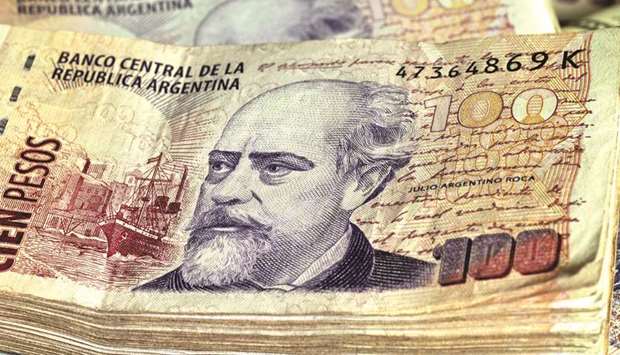
The peso has strengthened 6% since October 1