


Theresa May’s hopes of securing a compromise from the EU on the backstop element of her withdrawal plan have been dealt a blow after Ireland firmly said it must remain.
The Irish Deputy Prime Minister, Simon Coveney, said the backstop “as part of the withdrawal agreement is part of a balanced package that isn’t going to change”.
Speaking on BBC One’s The Andrew Marr Show, Coveney said: “The backstop is already a compromise. It is a series of compromises. It was designed around British red lines.”
Ireland has repeatedly stressed its commitment to retaining the backstop – the proposal to keep the entire UK in a customs union with the EU at the end of the transition period to avoid the return of a hard border, if new trade arrangements or technology fail to deliver this outcome. But some ministers claim to have picked up signs in Brussels that other members of the EU may be inclined to compromise on this issue.
Coveney said that without a backstop in the withdrawal agreement, Ireland would have to rely on just an “aspirational hope” that a hard border could be avoided.
This month the withdrawal agreement negotiated by May was rejected by MPs by a crushing 230 majority. For Tories who voted against the deal and for the Democratic Unionist party, whose support May needs for a majority, the backstop was the single most objectionable aspect of the plan.
Speaking on the same programme, Matt Hancock, the health secretary, rejected a suggestion that Coveney’s comments meant May’s deal was “dead in the water”. He said Coveney was articulating “a negotiating position” and that Ireland did not want a no-deal Brexit.
“The whole purpose of the backstop is to avoid a hard border, which risks being a consequence of a no-deal Brexit,” he said.
May tomorrow faces a further threat to her authority when the Commons is expected to vote on a move that would potentially enable parliament to order her to demand an extension of Article 50 if she cannot get a deal agreed by February 26.
The plan is to set out an amendment tabled by the Labour MP Yvette Cooper, and an accompanying bill, and it is attracting enough Conservative support to mean it has a good chance of passing if Labour officially backs it, as it has indicated it will.
Speaking to Marr, Hancock said the Cooper amendment was flawed because delaying Brexit would not necessarily prevent ‘no-deal’.
He said: “You can’t just vote for delay – that doesn’t solve anything. You have got to vote positively for a deal, so let’s keep having those conversations about what the Commons can coalesce around.”
Other amendments that may be put to a vote tomorrow, from Brexiters, address the backstop issue. One amendment would lead to it expiring at the end of 2021, and another would require it to be taken out of the withdrawal agreement altogether, and replaced with other arrangements to avoid a hard border in Ireland.
These are potentially useful to May because, if passed by a clear majority, they would enable her to tell the EU what changes to the withdrawal agreement could lead to it being passed by parliament. But Coveney’s comments seemed intended to close down the prospect of the backstop being renegotiated.
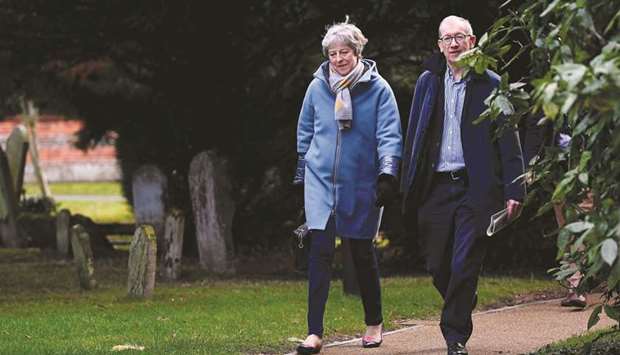
Prime Minister Theresa May and her husband Philip leave church near Maidenhead yesterday.