


Qatar Chamber’s Research and Studies Department met with a US delegation from Hopkins University yesterday to showcase the economic measures Qatar has implemented to overcome the impact of the June 2017 economic blockade.
Qatar Chamber’s presentation shed light on the methods taken by the government to address the challenges wrought by the blockade, such as the launch of direct shipping lines to other international ports, prioritising local products over foreign imports, and the role of the private sector, particularly the Chamber.
Aside from new shipping routes between Hamad Port and number of ports in and outside the region, other steps taken by the government were aimed at encouraging and motivating the local industry, supporting the national products, and obliging ministries and government agencies to buy 100% local products, as well as reformulating the food security strategy.
The presentation highlighted the positive gains from the blockade, including the dependence on local products, which grew from 5% before the siege to 30% after the blockade, the establishment of 164 agricultural companies, and a 22% growth in the number of new companies.
It also reviewed the efforts of Qatar Chamber to overcome the blockade as a representative of the private sector, and outlined the measures taken in co-ordination and co-operation with the authorities to address the impact of the blockade.
The Chamber worked with importers of food and building materials to find new alternatives and overcome all the obstacles facing companies operating in this sector in order to ensure the continuous flow of goods to Qatar.
It added that the Chamber had benefited from the ties it forged with its international counterparts and the opening of new markets for Qatari products. The chamber also launched several initiatives to support national products by urging commercial complexes to prominently display these products or through exhibitions that support local products.
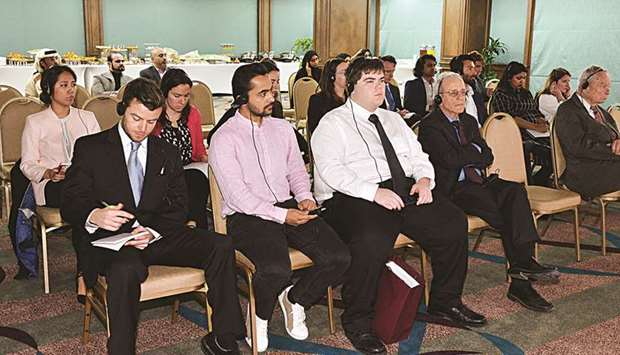
Members of the US delegation from Hopkins University listen to a presentation delivered by Qatar Chamber’s Research and Studies Department yesterday.