


Chief Justice of Pakistan Saqib Nisar has defended the apex court’s judicial activism, explaining that the judiciary is the “guardian of the fundamental rights of the people of Pakistan” by the law, and thus “duty bound to ensure that the rights of the people are protected”.
The chief justice, in his speech at a graduation ceremony for medical students at the Islamia University Bahawalpur’s historic Abbasia campus, discussed the areas that the Supreme Court had paid special attention to during his time in the office, which is set to conclude in January 2019.
Referring to his suo motu notices regarding high fees charged by private medical colleges and the lack of facilities at several hospitals, the chief justice said that he is trying to “end the exploitation (of the people)”.
He said that it is his “judicial duty” to lay down criteria for medical colleges to ensure that they do not exploit students and parents.
“Did I exceed my jurisdiction by laying down criteria (which ensures) that tertiary hospitals have enough doctors, staff and drugs, in order to discharge the obligation of the guardianship (imposed upon the judiciary)?” he asked.
Nisar narrated his observations during his visits to hospitals across the four provinces and regretted that medical facilities in the country remain unsatisfactory.
Furthermore, the chief justice spoke about female doctors who abandon practice after getting their medical degrees.
“If you sit at home and become housewives (after receiving medical education), you violate the oath that you swore today, which is to help the miserable,” he pointed out.
Nisar said that the Constitution had ended the quota system where women were allotted fewer spots than men, so that admissions are given on the basis of merit.
It is detrimental to the society, he said, when female doctors abandon their profession.
The chief justice urged female students to convince their families to facilitate them so they can serve as doctors and repay the resources provided to them by the state.
Nisar also spoke about curbing the flaws of institutions being the judiciary’s constitutional responsibility.
“I have spent my whole life working for the provision of justice. The purpose of my life is to stay loyal to my profession,” he said. “The real service is to fulfil your professional responsibilities with sincerity. My test has started and its results will come after I retire.”
He stated although that ensuring that proper health services are provided is not his job, or that of the Supreme Court, “there are flaws in hospital management systems, and curbing flaws of institutions is the constitutional responsibility of the judiciary”.
“We did not interfere in the internal matters of any institution,” he further said.
Nisar lamented that “private hospitals are no longer academic institutions, and have become business centres”.
“The court recovered Rs726mn from the millions earned by private medical colleges as fees, and returned it to the students,” he added.
Recalling incidents from his childhood, the chief justice said: “When I was eight years old, I used to take my mother to the doctor in a horse carriage, and we used to spend hours at the clinic.
“My mother taught my brother and I to serve humanity, and prayed to God to protect us from all difficulties.”
“Those who suffer greatly, understand the pain of others,” the top judge added. “I began my mission with my mother’s teachings in mind.”
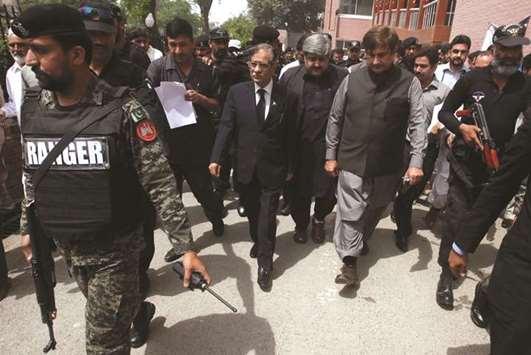
Chief Justice of Pakistan Saqib Nisar: I have spent my whole life working for the provision of justice.