


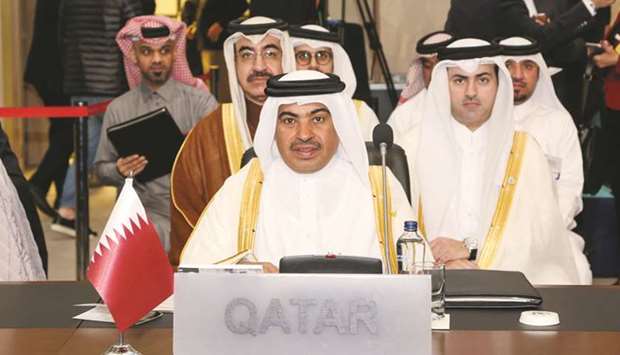
Qatar, through HE the Minister of Commerce and Industry Ali bin Ahmed al-Kuwari, is representing the Arab group at the four-day event.
Al-Kuwari voiced hope on behalf of the Arab group for increased support for joint Islamic action in a bid to tackle regional challenges and promote peace and stability across the region.
He said the meeting was taking place in light of considerable geostrategic and economic changes, amid a decline in multilateral trade and a lack of tangible progress at the World Trade Organisation’s 11th Ministerial Conference. The minister said the meeting comes at a time when a number of countries have been inclined to impose additional protectionist measures on international trade, which calls for increased co-ordination and co-operation among OIC countries to confront and mitigate the effects of these changes, which have the potential to affect the security, stability and future of Islamic countries and their people, and stand in the way of achieving joint interests and objectives.
However, the minister noted that current circumstances are favourable to achieving a quantum leap in joint Islamic action, particularly as Turkey has made significant efforts over the past two decades to translate the objectives of Comcec into tangible achievements.
He stressed that Turkey is pursuing its efforts to promote joint Islamic action and implement Comcec’s 2016-2025 Plan of Action, which was adopted at the 13th Islamic Summit held in Istanbul in 2016.
Al-Kuwari proposed the launch of a number of innovative initiatives to overcome difficulties and obstacles facing OIC member states, amid geostrategic and economic changes.
He called for the adoption of the declaration on the development of a free trade zone between OIC member states as a first step towards the establishment of an Islamic Common Market, which was endorsed at the Tehran Summit in 1997, while maintaining the Framework Agreement on the System of Trade Preferences among OIC member states as a general legal framework.
The minister also called for the launch of new rounds of negotiations on the trade preferential system among OIC member states to ensure a swift and voluntary tariff reduction and to assess the potential use, if any, of local currencies and a clearing system in intra-trade transactions.
Al-Kuwari also called for the establishment of a fund to finance four projects, including an integrated programme for the development of the Halal industry across OIC member states and the OIC Investment Programme, in addition to organising a high-level conference on investment challenges in the Islamic world.
He also advocated the development of a trade facilitation programme and a unified window system, and the promotion of trade between OIC countries similar to Arab-African trade bridges.
On co-operation efforts among Comcec members, al-Kuwari said Arab countries had adopted Comcec’s recommendations on the development of bilateral trade, as well as the promotion of joint investments and a business-friendly environment.
Additionally, the nations have also developed a leading financial market and a transparent ownership system, while seeking to enhance the contribution of the private sector in the financing and implementation of investment and development projects.