


India yesterday paid tribute to the more than 160 people killed in a 2008 terror attack in Mumbai, the 10th anniversary of an assault that raised fears of war with Pakistan.
Senior politicians laid wreathes and paid tribute to the victims at a Martyrs’ Memorial in Mumbai, while other events were held at some of the sites of the three-day attack, which began on November 26, 2008.
Six Americans were among the 166 people killed by 10 gunmen who infiltrated the financial hub by boat and spent three days spraying bullets and throwing grenades around various city landmarks.
“A grateful nation bows to our brave police and security forces who valiantly fought the terrorists during the Mumbai attacks,” Prime Minister Narendra Modi said on Twitter.
Played out on TV news channels around the world, the bloody events – widely known as 26/11 – have been compared in India to New York’s suffering on September 11, 2001.
The co-ordinated attacks on the city of nearly 20mn people hit luxury hotels, the main railway station, a restaurant popular with tourists and a Jewish centre.
Residents and railway officials also paid their respects at Chhatrapati Shivaji Terminus train station where Mohamed Kasab, the only gunman caught alive, and another attacker killed almost 60 people and wounded at least 100 others.
The Taj Mahal Palace and Tower Hotel held a private service to remember the 31 people who died there.
Over 60 hours, four attackers shot dead guests and hotel staff, detonated explosives and set ablaze parts of the building – including its famous dome.
Dramatic scenes of commandos battling the heavily armed gunmen, and guests tried to escape from windows down bedsheet ropes were beamed around the world on live television.
Security forces only retook control of the hotel on the morning of November 29.
More than 30 people also died at the Oberoi and Trident hotels in a 42-hour siege involving shootings, explosions and hostage-taking.
Six hostages – including a rabbi and his pregnant wife – were killed at Nariman House, a Jewish cultural and religious centre.
The current rabbi, Israel Kozlovsky, unveiled a new memorial listing the names of all those who died in the 26/11 attacks.
“Those who gave their life for the country, those who gave their life for us, they deserve to be remembered and they deserve to get their honour and tribute,” he said.
Kasab, the gunman caught at the railway station, was executed by India in 2012 after being found guilty of charges including murder and waging war against India.
India has blamed militants linked to the Pakistan-based Lashkar-e-Taiba (LeT) group for the attacks and said the gunmen were Pakistani.
Pakistan condemned the attack, denied involvement of any of its agencies and offered to co-operate with India in the investigation.
Nevertheless, tension soared between the nuclear-armed neighbours after the attacks.
India and the United States accused Hafiz Saeed, who founded the LeT, of being the attack mastermind.
He denied involvement but Pakistani authorities placed him under house arrest for different periods.
He was most recently released in November 2017.
US Secretary of State Michael Pompeo called on Pakistan to uphold their UN Security Council obligations to implement sanctions against those responsible for this attack, including LeT and its affiliates.
“It is an affront to the families of the victims that, after ten years, those who planned the Mumbai attack have still not been convicted for their involvement,” Pompeo said in a statement.
The US State Department also announced a reward of up to $5mn for any information leading to arrests or convictions of those involved in the execution of the 2008 Mumbai attack.
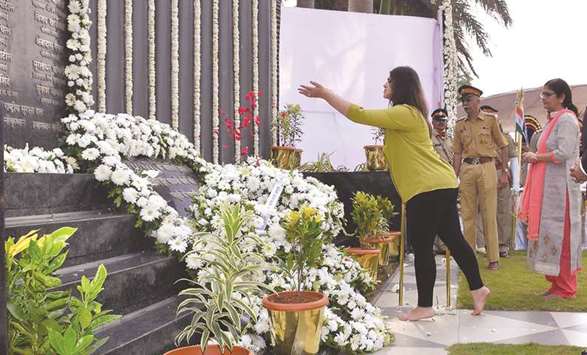
Divya Salaskar, daughter of slain policeman Vijay Salaskar, pays respects at the Police Memorial, during an event to commemorate the 10th anniversary of the 2008 Mumbai terror attacks yesterday.