


The breakup of Thyssenkrupp will hand activist investors their biggest win yet in Germany. The company on Thursday announced a plan to split itself in two, buckling to pressure from Swedish firm Cevian Capital and Paul Singer’s Elliott Management Corp Unions, local politicians and even Chancellor Angela Merkel had argued for keeping Thyssenkrupp intact.
While activist-led boardroom fights are common corporate practice in the US, it’s still rare in Germany, where the traditional approach to decision-making is based on consensus between employees and shareholders. That’s quickly changing as European companies find themselves under scrutiny by large, vocal shareholders.
Nestle has bought and sold businesses at an accelerated pace after pressure from Third Point, the activist fund run by Dan Loeb. Elliott took control of Telecom Italia’s board in May, and has argued for changes including a spinoff of the phone network.
Thyssenkrupp’s new model is welcome because it will help avoid a bigger break up of the firm, said Knut Giesler, regional chief of the powerful IG Metall labor union. “It offers an opportunity for all areas of the company to develop a sustainable business strategy,” he said.
Thyssenkrupp shares slipped 0.5% on Friday, paring Thursday’s 9.9% rally, which was the biggest in nine years.
The company will divide business two categories. One, called Thyssenkrupp Industrials, will combine elevators, automotive supplies and plant construction. The other, called Thyssenkrupp Materials, will run steel and metal-focused operations.
While Thyssenkrupp’s overhaul happened under duress, it underscores a trend sweeping through Germany’s traditional corporate icons: the dismantling of conglomerates.
Through a series of spinoffs, disposals and joint ventures, engineering giant Siemens is in the midst of transforming itself from a lumbering aircraft carrier into a more nimble fleet of ships, in the words of CEO Joe Kaeser. Daimler is breaking up into three legally separate units – cars, commercial vehicles and mobility services – to eventually open the door to deals and spinoffs.
As digitalisation accelerates the pace of business and globalization creates new competitors, conglomerates like Thyssenkrupp have become a dying breed. General Electric Co is exiting oil and health care, and Philips in 2016 split into lighting company Signify and healthcare specialist Philips.
In the case of Thyssenkrupp, the restructuring follows months of turmoil sparked by executive resignations, pressure from activist investors and losses at its industrial division. The company has run without a permanent chairman and chief executive officer since July. The breakup comes weeks after the labour union initiated talks with Cevian and the top shareholder, the Alfried Krupp von Bohlen und Halbach Foundation, about Thyssenkrupp’s future, bridging what’s been a contentious divide.
“The labour representatives are backing the move,” said Markus Grolms, secretary at labour union IG Metall and Thyssenkrupp’s interim chairman.
Cevian, the second-largest shareholder, said on Thursday that it also supports the split. The investment firm had argued that a complicated business structure was responsible for Thyssenkrupp’s weak performance.
“This will reduce complexity, promote entrepreneurial freedom and agility,” said Lars Forberg, co-founder of Cevian. “This strategic decision is an important step to tackle the underperformance of the past.”
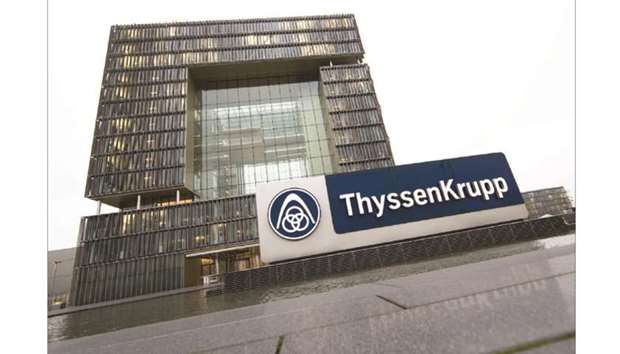
A view of ThyssenKrupp headquarters in Essen. The breakup of Thyssenkrupp will hand activist investors their biggest win yet in Germany.