


India’s benchmark equity index declined yesterday, capping its worst month in more than two years after a lender’s default triggered a selloff in financial shares, compounding concerns that rupee weakness and higher crude oil prices may crimp company earnings.
The S&P BSE Sensex fell 0.3% to 36,227.14 points at the close in Mumbai yesterday, taking this month’s drop to 6.3%. Fifteen of 19 sector sub-indexes compiled by the BSE declined, led by real estate and metal shares. Yes Bank was the biggest loser on the benchmark, touching its lowest level since May 2016, after saying it hadn’t tried to cover up bad loans.
Indian authorities have spent the week containing the collateral damage from IL&FS Group, a major infrastructure lender, struggling to service $12.6bn in debt.
“The decline in financial stocks due to lenders’ liquidity issues won’t get arrested easily,” A K Prabhakar, head of research at IDBI Capital Market Services, said by phone. “The rupee and crude oil will also remain a problem.”
India lost its spot as Asia’s best-performing stock market this year to New Zealand after the selloff in non-bank finance firms spooked investors already concerned about the effect of higher oil prices and a slump in the rupee on the nation’s economy.
The benchmark had its worst month since February 2016 and volatility is back to levels seen earlier this year after declines eroded the measure’s quarterly gain.
Meanwhile the rupee yesterday strengthened against the US dollar, tracking gains from Asia currency markets. Rupee closed at 72.49 a dollar, up 0.15% from its previous close of 72.60. The currency opened at 72.52 a dollar, touching a high 72.40 and a low 72.66.
The 10-year gilt yield stood at 8.024%, down from its Thursday’s close of 8.027%. Bond yields and prices move in opposite directions.
So far this year, the rupee has weakened 11.33% and is the worst performer among Asian currencies. Foreign investors have sold $1.92bn and $9.42bn in equity and debt markets, respectively, since January.
Asian currencies were trading higher. South Korean won gained 0.306%, Philippine peso 0.217%, Thai baht 0.189%, China Offshore 0.151%, Taiwan dollar 0.141%, Indonesian rupiah 0.134%, China renminbi 0.108% and Malaysian ringgit 0.068%. However, Hong Kong dollar lost 0.1%, Japanese yen 0.053% and Singapore dollar 0.015%.
The dollar index, which measures the US currency’s strength against major currencies, was trading at 95.323, up 0.45% from its previous close of 94.894.
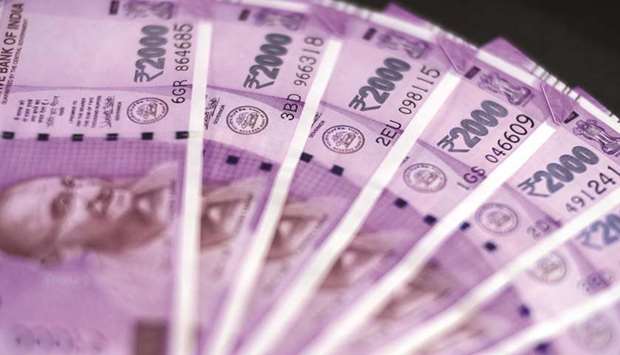
The rupee closed at 72.49 a dollar yesterday, up 0.15% from its previous close of 72.60