


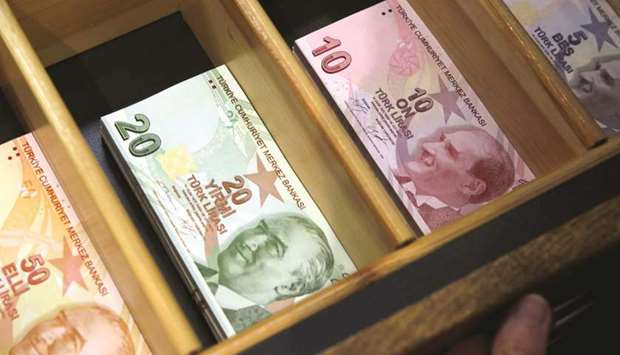
The currency has lost about 38% of its value against the dollar this year due to a sell-off accelerated by a row with Washington over an American evangelical Christian pastor detained in Turkey on terrorism charges.
The attendant sell-off in the lira has raised concerns about the impact on the broader economy — given Turkey’s reliance on dollar-denominated energy imports — and a possible surge in bad loans in the banking sector.
At 1527 GMT, the lira stood at 6.2561 against the dollar, weakening from a close of 6.1200 on Monday, when it weakened to near 6.3 before rebounding in its first day of trade after a week-long holiday.
The main stock index rose 2.83% by yesterday’s close to 93,866.94 points.
“At this point in time Turkey has become pretty much un-tradable,” said Tim Ash of BlueBay Asset Management in emailed comments. “The market wants to see specific delivery on policy whether that is monetary, fiscal or action to clear up problems in the banking sector.”
Germany denied a report that it might provide financial aid to Turkey to help it weather the currency crisis.
Also yesterday ratings agency Moody’s downgraded 20 Turkish financial institutions, saying there were signs of substantial increase in risk of a downside scenario. It said Turkey’s operating environment had deteriorated beyond previous expectations.
Facing economic pressure from the US, Turkey has signalled a wish to improve strained ties with the European Union, which it still aspires to join despite disagreements.
After meeting his French counterpart in Paris on Monday, Albayrak also took aim at the US, saying US sanctions could ultimately aggravate the region’s crises.
The Wall Street Journal reported that Germany was in early stage talks to provide emergency financial aid to Turkey, fearing its economic troubles could spread to Europe and further destabilise the Middle East. But a German official denied this.
“You can’t do much from the outside but to stress that Turkey must reform itself,” a second official told Reuters.
US President Donald Trump this month authorised a doubling of duties on aluminium and steel imported from Turkey, triggering retaliatory measures from Ankara.
Investors are also worried by a US Treasury investigation into state-owned Turkish lender Halkbank, which could face a potentially hefty fine over allegations of busting sanctions on Iran. The bank has said all its transactions were legal.
Separately, Ankara announced a new campaign yesterday to support the real estate sector, offering a 10% discount on some home sales.
Under the campaign, any price increases due to rising exchange rates will be discounted from the cost of the residence, the environment and urbanisation minister said.