


The 2019 budget proposal calls for a spending increase of about 9.7% from last year’s initial budget, the biggest jump since the aftermath of the global financial crisis in 2009, the finance ministry said in a statement.
Spending to create jobs will rise a record amount, while infrastructure spending will fall, the ministry said.
Moon’s approval ratings have dropped to the lowest level since his election in May 2017 as the economy has run into headwinds.
He vowed to be a “jobs president” and to create a fairer society, but has faced a backlash over an aggressive increase in the minimum wage that some blame for a hiring slowdown.
Both the government and Bank of Korea have trimmed their forecasts for economic growth this year to 2.9% from 3%. Employment has been rising but at a slower pace.
The jobless rate ticked up to 3.8% in July, according to Statistics Korea.
The BoK has held the benchmark interest rate at 1.5% since raising it from a record low in November.
The government will emphasise the “active role of fiscal policy” in facing the nation’s economic challenges, including “extremely difficult” employment conditions, Finance Minister Kim Dong-yeon said last week. The budget proposal calls for spending a record 24tn won to boost employment, including creating more jobs for the elderly, the disabled and women, Kim said.
Some of that money will provide indirect support for job creation in the private sector, he said. To nurture innovative growth, the government will expand investments in research and development by 3.7% to 20tn won. The government’s spending plan may support private consumption and will likely help mitigate any downside risks to economic growth next year, said Park Seok-gil, an economist at JPMorgan Chase & Co.
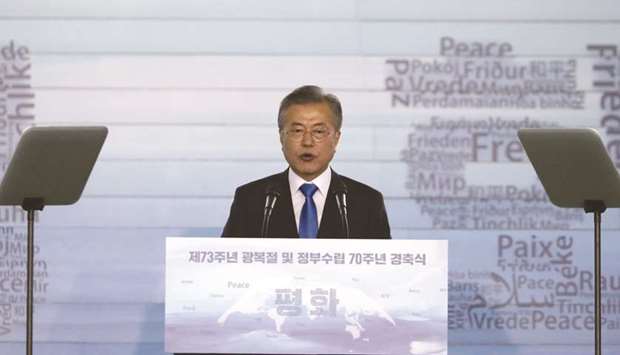
While his finance minister drew a sombre picture of the economy, Moon on Saturday said the country is on the right economic path. “The quantity and quality of jobs has generally improved,” he said.
Government revenue will increase by 7.6% to 481tn won next year, thanks to higher corporate tax revenue, the finance ministry said.
The government’s debt is expected to be 39% of gross domestic product, the ministry said.
The government plans to issue up to 97.8tn won of bonds in 2019.
Of the total, 57.1tn won will be used for redemption payments.
The remainder will be net issuance.
Moon’s administration plans to increase spending by an average of 7.3% per year between 2018 and 2022, and forecasts revenue to rise by an average of 5.2% annually.
The government projects a fiscal deficit of around 3% and government debt of around 40% of GDP during the period, the finance ministry said.
The government will submit the budget proposal to parliament in early September. Moon’s Democratic Party of Korea holds only 129 of the 299 seats.
This year’s budget proposal is expected to face stronger opposition than last year’s, which was approved with only minor changes.