


During his 20 years at Exxon Mobil Corp, one of Rafael Grisolia’s roles was to placate his superiors in Texas when Brazil’s economy went off the rails.
As Petrobras’ chief financial officer, he is doing exactly the same with investors who fret about Brazil’s future after the October elections, one of the most unpredictable in recent memory. The main question is whether the oil giant could again be subject to the heavy state intervention that forced it into unprofitable ventures in recent years, with billions of dollars of losses as a result.
“I’ve seen almost all the (economic) plans in Brazil, and spent my career explaining these,” Grisolia, who worked in finance and strategic planning at Exxon in Brazil, told Bloomberg in an interview. “When we leave this cloudy situation, which applies to all companies in Brazil, what we have are really good numbers and a more efficient Petrobras.”
Grisolia was hired in June during a management shake-up triggered by a national trucker strike against rising fuel prices. The strike also marked an informal start to the election campaign, as the spotlight on diesel and gasoline forced candidates to take positions on a topic that affects everybody’s lives.
Most presidential hopefuls called for Petrobras and the government to help shield consumers from sharp price swings, reviving memories of costly subsidies the company was forced to provide under previous administrations, and contributing to a massive sell-off its the stock.
When confronted by investors about election risks, with market-friendly candidates trailing in the polls, Grisolia highlights improvements the company made since it was embroiled in the so-called Carwash bribery investigation, and that will likely survive the political transition. Production is on the rise, debt is coming down, and costs are under control, he cites.
Moreover, new by-laws implemented since Carwash started four and a half years ago make it harder for the government to use its majority of voting shares to set corporate policies, as it did during the most recent oil boom by instructing Petrobras to sell fuel below international rates.
Grisolia says he should remain at Petrobras until his term expires in March, as the new rules make it harder for the government to abruptly overhaul company management. This would be a shift from the past two decades, when Petrobras’ leadership changed each time a new party won the presidency.
“Everything is possible, but not that possible. The governance we have today didn’t exist before,” he said. “You would need to call a shareholders meeting to change the board first.”
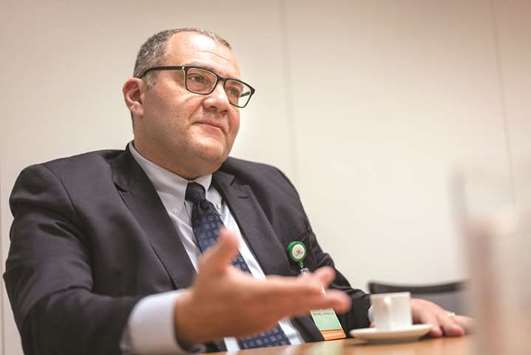
Grisolia: Towards a more efficient Petrobras.