


Bhume, a festival of Nepali Magar community, was recently celebrated in Gulf Horizan hotel, for the second time in Qatar, with the title of ‘Magar Fair 2018’ to support kidney patients in Nepal. The programme was chaired by Sher Bahadur Roka Magar, Chairman of Nepali Magar Association Qatar. Debaraj Rai, Chairman of Non-Resident Nepali Federation of Indigenous Nationalities, was the chief guest on the occasion. The Magar community celebrates the festival showing respect to their ancestors and nature.
Magar is one of the indigenous communities in Nepal, having a distinct language, culture, and historical origin. The Magar community members wore their traditional attire at the programme that was attended by Bijaya Magar, Tej Katuwal and Mahendra Thapa Magar, community leaders, and many representatives from other non-resident Nepali organisations.
The programme kicked off with a patriotic song and remembrance of Lakhan Thapa, the first martyr of Nepal. Avivat Pun Magar, First Vice President of Nepali Magar Association, welcomed the gathering in the festival. Prakash Roka Magar, the co-ordinator of the programme, discussed the importance of the festival in detail. He said the programme focused on preserving history, language and culture of the Magar community.
The event also witnessed various cultural performances by Magar artistes. Folk dances like Tappa, Bhumyaha and Hurra with folk and modern songs were presented for the gathering. The folk dance Salaiju was performed by Tara Thapa Magar, Som Thapa Magar, Ram Saru Magar, Saran Pun Magar, Badri Pandey and Kiran Pun Magar. Radika Thapa Magar wore a colourful traditional Magar dress. “I feel very happy in this attire. I am proud of being a Magar. I feel very happy when I look beautiful in my traditional clothes that my forefathers used to wear,” she said.
The chief guest talked about the objectives of the ethnic organisation, saying it would strengthen indigenous peoples’ unity, harmony, and brotherhood. He added the organisation would also preserve and promote the indigenous language, script, culture, and literature.
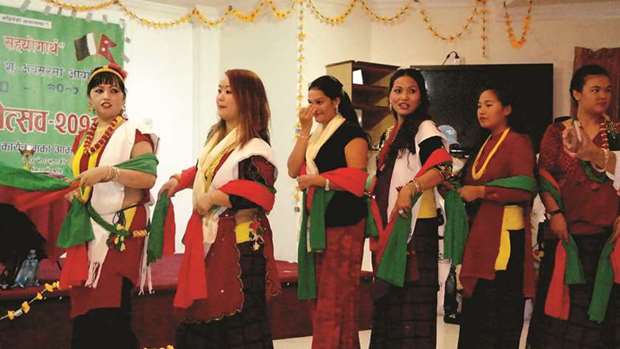
TRADITIONAL: Magar women in their traditional dress.