


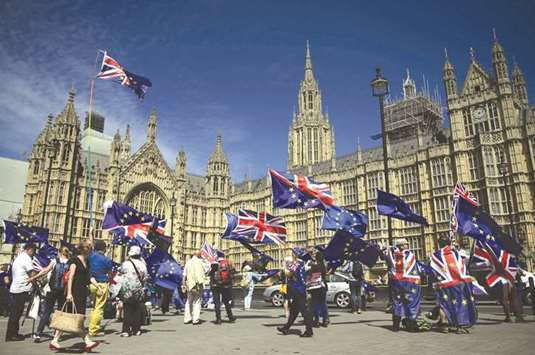
The Conservative MPs told the Guardian that they are not yet satisfied with some of the changes to the legislation despite senior government figures saying they were confident of getting them through.
The prime minister yesterday urged her backbench MPs at the 1922 Committee to send a message of unity over Brexit by reversing the Lords amendments to the legislation when it returns to the Commons today.
Downing Street insiders believe they can overcome the 15 defeats by the Lords, covering areas including giving parliament a meaningful final vote as well as seeking to keep the UK in the customs union, even though Labour has said it will support all the amendments but one.
However, several of the leading Tory Remainers who helped inflict May’s only Commons defeat on Brexit when they voted in December for a legal guarantee of a vote on the final deal, insisted their support should not be taken for granted.
Former chancellor Ken Clarke told the Guardian he remained determined to back the meaningful vote amendment. “It will mean that parliament will have a decisive say on the broad nature of the final deal, and without it, parliament will be marginalised,” he said.
He pointed to last week’s standoff between Theresa May and her pro-Leave Brexit secretary, David Davis, as evidence that Downing Street risks being pushed around by the Brexiters.
“Without our involvement, the government will face the same situation it faced last week, when the final agreement comes round, because the Brexiters will give threats and briefings against any deal unless they’re satisfied with it. They will have a veto, and parliament will have no effective control.”
Former minister Jonathan Djanogly, the MP for Huntingdon, said: “There remain serious issues to be debated and the government line that the rebels have been silenced or placated is simply not true.”
Sarah Wollaston, MP for Totnes and chair of the Commons health select committee, said she was “minded” to support the Lords amendment on giving parliament a meaningful vote on the exit deal, and called for “further concessions” on the customs union.
“We would like to see further concessions on the amendment on the customs union because it is just a very sensible amendment that says keep it on the table, don’t completely rule it out,” she told the BBC.
At least two more Tory rebels told the Guardian they were planning to rebel against the government again, despite whips warning that it could be counterproductive ahead of a key Brussels summit later this month, where May will try to negotiate a trade deal.
One said that the updated amendment tabled by ministers on the meaningful vote went quite a long way towards addressing concerns but warned the issue was still “exercising a lot of people”, in particular over what might follow if the government failed to get a deal at all.
The Tory MP added: “If there are no more changes I think the rebellion will be quite big. Most people are very firm. There are one or two additional potential rebels who have not yet indicated firmly what they intend to do, but are raising concerns with Downing Street.
“Any defeat suffered by a government is never helpful and clearly there is a European council but I think there is a heavy element of normal whips tactics there which I don’t think people will be that susceptible to.”
Another potential rebel said it would be “pathetic” if parliament was bought off with the promise of a statement after 28 days. “The statement may say we’re leaving without a deal, and it might say: ‘get lost.’”
One Tory rebel predicted that “the discussions and big battles” over the customs union would take place when the customs and trade bills returned to the Commons in July instead.
Downing Street insiders suggested there would be more discussions with backbench MPs who had outstanding concerns over the bill. One source said: “There have been lots of meetings, we’re keen to engage with all members of the parliamentary party, and I imagine that there will be.”