


Train stands for Tax Reform for Acceleration and Inclusion, a tax reform programme the government has implemented in January this year.
Francisco Pagayaman, chairman of the Katipunan ng Damayang Mahihirap (Kadamay) Northern Mindanao, told Manila Times that the “Black Friday” movement intends to gather 6mn signatures nationwide to push for the scrapping of the Train law and the adoption of House Bill 7653, which calls for the suspension of the Excise Tax and the implementation of the old National Internal Revenue Code.
“The impoverished people now feel the ill-effect of the Train Law, which was found to have propelled a 4.5% inflation during the law’s initial implementation. We could foresee a bleak future if the ‘Train’ continues to move,” Pagayaman said.
He said as an alternative to the scrapping of the Train Law, the Kadamay is supporting the passage of House Bill 7653, which calls for the re-implementation of the old National Internal Revenue Code and applying a “zero” tax on oil and petroleum products, including liquefied gas and bunker oils.
Pagayaman added that the Black Friday movement organisers would mobilise about 5,000 supporters and sympathisers in Northern Mindanao to gather the signature campaign on a regionwide scale.
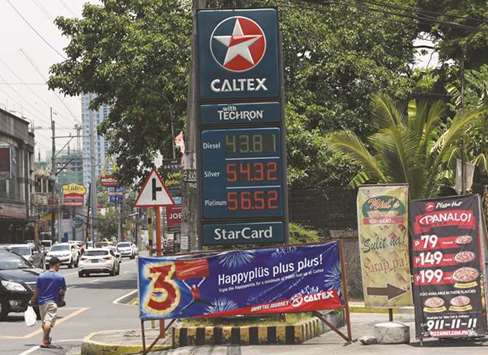
The transport group lead by the militant Solidarity of Transport in Region X (STAREX)-Piston is also flexing its muscles in a series of protest moves next week as another round of oil price hikes took effect on Tuesday.
“For the past two weeks, the pump prices of oil for both diesel, gasoline and kerosene products climbed by as much as P2,” Ringo Lago, spokesman for Starex- Piston in Northern Mindanao, said.
Since May 22, 2018, the last oil price hike was pegged at P1.15 per litre for diesel, P1.60 per litre for gasoline and P1 per litre for kerosene, he said.
Lago said the government should adopt measures to cushion the impact of oil price hike like the creation of the Oil Price Stabilisation Fund (OPSF) in the 1970s that served as a buffer fund when oil prices suddenly climbed in the world market.
The administration of President Ferdinand Marcos in the 1970s also acquired the Petron Oil Corp. as another alternative to counter the cartelisation of oil prices in the country.
The OPSF was dismantled during President Corazon Aquino’s term. Adding insult to the injury was the passage of the Oil Deregulation Law during the incumbency of President Fidel Ramos.
Ramos also privatised the government’s primary assets, including the ownership of Petron Co (Petrophil Corp), which the government under the Marcos administration acquired in 1973 for purposes of controlling the pump prices of oil.
Lago said various transport groups in the country is fighting for the lifting of the “Oil Deregulation Law,” believed to be the main culprit in the unrelenting oil price hike because of alleged oil cartel instituted by Shell, Petron and Caltex, all major fuel manufacturers/distributors in the country.