


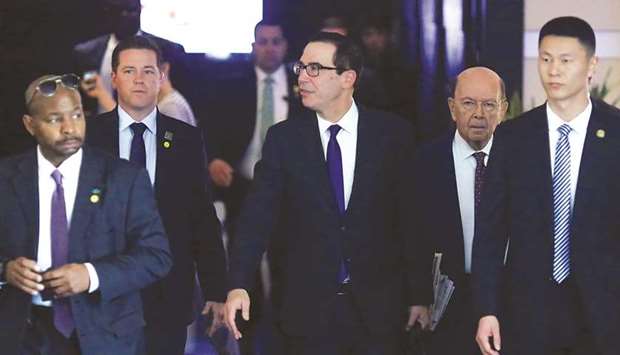
State media over the weekend offered a somewhat positive assessment of the US trade talks, urging more negotiations while saying the Americans should be “rational and pragmatic.”
And in a move that would meet some US demands, the Commerce Ministry is studying measures to further lower import tariffs on some food, pharmaceuticals and medical instruments, Economic Information Daily reported yesterday, citing unidentified people.
“In the next couple of months, we expect continued negotiations will likely result in a scale-back of the current proposal on tariffs as China quickens its implementation of some announced opening and reform measures,” UBS Group AG chief China economist Wang Tao said in a note. “As a result, we expect any direct impact on exports and economic growth from higher tariffs will be limited.” China is scheduled to report April trade data today. Possible US trade measures may impact Chinese exports later this year, Jing Ulrich, Asia-Pacific vice chairman JPMorgan Chase & Co, said yesterday at a media briefing in Beijing.
Two days of discussions ended Friday in Beijing with an agreement to keep on talking but little else, leaving the US threat of tariffs on as much as $150bn of Chinese imports still in play. The list of demands from each side, seen by Bloomberg News, showed just how wide the gulf between the world’s two biggest economies remains. The US wants China to cut its annual trade surplus by $200bn by the end of 2020 and not retaliate against US tariffs. It also wants a halt to subsidies and other government support for its Made in China 2025 plan that targets global domination in strategic industries from robotics to new-energy vehicles. China’s demands included asking the US to stop an investigation into the country’s acquisition of sensitive American technologies, adjust an export ban on ZTE Corp, and lift bans on exports of integrated circuits to China.