


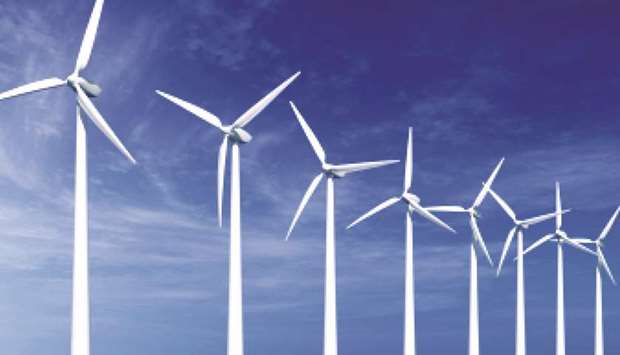
Japan Renewable Energy Corp is seeking to increase the capacity of wind power projects, both operating and under construction, to 1.3 gigawatts by 2025, from 47 megawatts now, executive officer Koki Yoshino said in an interview last week.
That will raise its total portfolio of producing and planned projects during that period to 2 gigawatts, up from 424 megawatts.
The company’s focus on wind comes amid falling rates in Japan for solar power producers and growing support from the government for wind to diversify the nation’s renewable power generation.
Solar currently accounts for more than 80% of JRE’s renewable capacity in operation or under construction, according to Yoshino.
Japan aims for renewables to make up as much as 24% of its power generation mix by fiscal year 2030, up from 12% in 2016.
“We will achieve our targets first with onshore wind projects,” he said. “Wind took a long time for us because of the environmental impact assessments, but we are ready for these stations starting this year and next.”
Unlike solar, large-scale wind projects need to complete environmental impact assessments, which usually take four years, before construction can start.
The assessment process length and costs, between ¥100mn and ¥200mn ($915,000 to $1.8mn), often deter less-committed developers, according to Yoshino.
“There are fewer players in the wind market compared with solar as there is a barrier to entry,” Yoshino said.
JRE is currently developing two offshore projects: a 180-megawatt station in the northern prefecture of Akita and a 240-megawatt farm in Nagasaki in southwestern Japan.
The Nagasaki project is expected to start sooner as it secured access to the grid and has the potential to expand to 1 gigawatt, he said.
In total, it has at least 13 onshore and offshore wind projects in varying stages of development.
Singapore’s GIC Pte announced in October it invested in JRE’s parent, GS Renewable Holdings GK.
The companies haven’t disclosed the ownership stakes.
JRE currently has 265 megawatts of capacity producing, including solar farms with almost 224 megawatts and wind projects with 32 megawatts, as well as a 9.6 megawatt combined project, according to its website.