


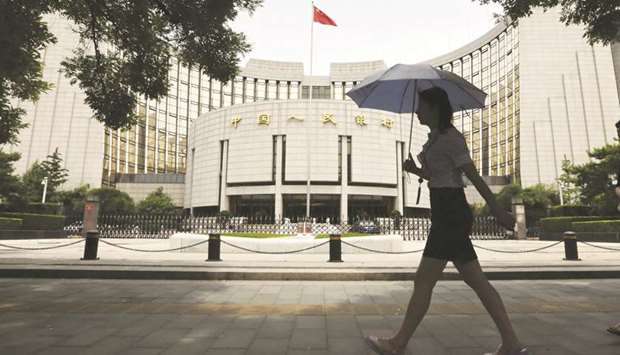
All existing asset management products must now comply with the new strictures by the end of 2020 instead of an original deadline of June 30, 2019, according to final rules published by the People’s Bank of China yesterday.
Regulators didn’t relent however on their plan to stop financial institutions from guaranteeing AMP returns.
Regulation of China’s 100tn yuan ($16tn) asset management industry is vital to government efforts to crack down on financial risks and contain growth in shadow banking.
President Xi Jinping in March merged the nation’s banking and insurance watchdogs and gave their chief a powerful position at the central bank to improve oversight and close loopholes.
AMPs are crucial because over the past decade they became a key source of funds that helped underpin China’s standout economic growth.
Investors piled into bank-issued wealth management products – the largest slice of the AMP pie at almost 30tn yuan – as they promised stable returns.
However, advertised yields may differ from actual returns on underlying assets, which increases risk across the financial system because it often forces lenders that distributed the AMPs to make up the shortfall.
Regulators are now seeking to remove these implicit guarantees, as well as cap leverage, reduce duration mismatch and increase transparency on who actually issues and holds these products.
Other key points in the regulations include: Financial institutions should offer yields based on the net asset value of the products they issue, to reflect the risks and return of the underlying assets. Closed-end asset management products should have a maturity of at least 90 days. The leverage – total assets divided by net assets – for publicly-raised funds and private funds is capped at 140% and 200%, respectively. Asset-managements products can only invest in one layer of other investment products, unless the money is invested in publicly-raised equity funds. Financial institutions aren’t allowed to be channels for each other’s asset-management products in order to evade regulatory curbs on investment scope and leverage limit. Investors cannot use funds raised, including those from loans and bonds, to invest in asset management products. Some Chinese banks had asked regulators for more time to implement the new AMP rules, arguing a delay was needed in order to maintain market stability.
Signs of strain have emerged over the past months as investors pulled back from risky assets amid the crackdown, leaving borrowers such as property developers and local government financing vehicles scrambling for funds.
Meanwhile, banks are turning to financial derivatives and negotiable certificates of deposit amid declining WMPs.