


 |
|
|
Forty years ago, 16 passengers survived a plane crash and 72 days in the freezing cold of the Andes with hope and cannibalism.
For the survivors, it was a nightmare although the world later called it the “Miracle of the Andes.”
Uruguayan Air Force Flight 571 left Montevideo on October 12, 1972, for Santiago. The Uruguayan rugby team, the Old Christians Club, was to play a friendly match in the Chilean capital and were accompanied by friends and acquaintances.
The weather closed in, so the pilot opted to land in the Argentine city of Mendoza at the foot of the Andes, where passengers and crew spent the night. On October 13, conditions were no better, but the crew of five, under pressure from the passengers, decided to fly on to Santiago.
Turbulence over the range was expected for the twin-engined turboprop Fairchild Hiller FH-227D, but the 40 passengers - there were also five crew members on board - took the warnings with smiles and a lot of confidence. Most were 19 or 20 years old, and for many, it was their first trip on a plane.
However, the flight ran into trouble over Chile when the aircraft dropped 200m, clipped a mountain and lost a portion of its tail and then crashed onto the snow. Twelve people died instantly, and three more succumbed to their injuries on the first night.
The Santiago airport control tower had received the last radio message from the flight at 3:30pm.
On the ground, the survivors slowly began to appreciate their predicament: They were at an altitude of 4,000 metres in temperatures as low as minus 30 degrees Celsius with little food and just the plane’s wrecked fuselage for shelter against the wind and snow. The clock was ticking.
After 10 days, they heard on their small radio the bitter news that the search for them had been called off.
They then made the heart-rending decision that would later bring the accident sensational headlines: They began to eat the flesh of their dead companions. It was a terrible thing to do, but their own lives were at stake.
“When we learned that the search had stopped, that we no longer existed for the world, we had to make a decision, and we had nothing left to eat,” survivor Carlos Paez recalled in an interview 10 years ago for the disaster’s 30th anniversary. “That’s how it was.”
The group endured weeks of violent storms and freezing cold. Many could not take the strain and died. The strongest went on expeditions to see where they were but found little comfort. They were stranded in the snow-covered isolation of the world’s longest mountain range.
In the late afternoon of October 29, as the group was getting ready for yet another freezing night, an avalanche buried what was left of the plane in the snow and killed a further seven men and one woman.
The number of survivors had sunk to 19 by then, and their conversations often turned to food.
“We were so hungry,” recalled Paez, who was 18 at the time. “We made a list of 130 restaurants in Montevideo. Pure masochism.”
The friends made a cross in the snow from pieces of luggage in the hope it could be seen from the air.
“What kept us strong was to think about the next day. ‘Maybe tomorrow!’ - that was what kept us alive for 72 days. ‘Maybe tomorrow!’ - that was our motto,” Roberto Canessa recalled in 2002.
It was he and Fernando Parrado, who managed to climb a mountain and get help. In 10 days, they walked 70km through the Andes until they found a Chilean peasant who in turn called in the rescue teams that picked up survivors by helicopter on December 22.
Back in Montevideo, they received a jubilant welcome. “Some people have called this the ‘Miracle of the Andes.’ I think it was rather a natural fight of man for life,” Paez said.
Sixteen people survived the ordeal.
“It would have been a miracle if all 45 had been alive after 70 days, but that was not the case,” Paez said.
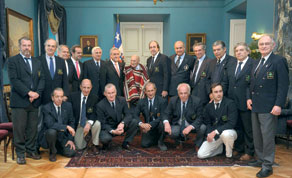
Forty years later, 11 of the survivors continue to deliver lectures about their ordeal to inspire others.
“It is always within our reach if we have the necessary confidence, even in the most adverse circumstance,” says Canessa, now a 59-year-old paediatric cardiologist.
British writer Piers Paul Read in 1974 gave the first extensive account of the ordeal in his book, “Alive: The Story of the Andes Survivors.”