


The US sanctions on United Co Rusal that have sent aluminium prices surging should be great news for rival producers like Rio Tinto Group.
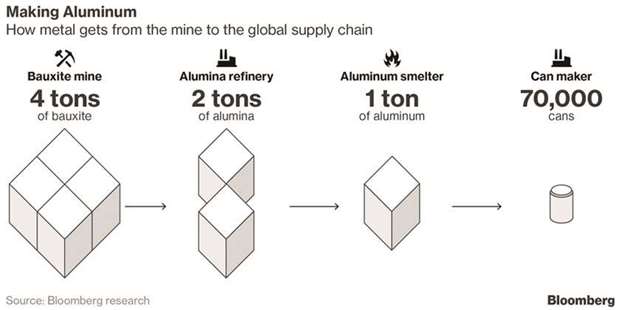
While Rio is the top miner of bauxite, the raw material that becomes aluminium, it’s dependent on Rusal for a key intermediate step in the process – the conversion of bauxite into alumina. Rusal’s refining operations, which stretch from its Aughinish plant in Ireland to operations in Jamaica, are a vital cog in a global interlocking supply chain that’s now been thrown into chaos.
As producers like Rio hunt for new buyers for their bauxite and sources of alumina to feed smelters, the global chokepoint created by the sanctions means that many of the miners, refiners and smelters that should be benefiting from surging prices are actually facing challenges just to keep their operations running. For aluminium smelters, suspending operations is a worst-case scenario and restarting is very expensive.
Rio, the world’s second-largest aluminium producer outside China after Rusal itself, is evaluating what shipments or supplies it can reroute and assessing its stockpiles, according to a person familiar with the situation. The company may even have to mothball some plants if supplies can’t be found, said the person, who asked not to be identified because the deliberations are private.
“The market will remain very tight while long-term buyers of Aughinish look for potential solutions,” said Anthony Everiss, a senior consultant at CRU Group. “It’s a pretty nightmarish scenario for them. There’s not that much on offer in the Atlantic to fill that gap.” Alumina prices have already rocketed, jumping by more than a quarter in the last week and heading for a record. Prices have been driven higher by a combination of the sanctions on Rusal, which was said to have declared force majeure on some shipments of the commodity on Thursday, and production cuts at Norsk Hydro ASA’s giant Alunorte alumina refinery in Brazil, the world’s biggest. Force majeure allows contracts to be left unfulfilled.
Alunorte has been running at 50% since a late-February court order amid accusations that a rainstorm led to contamination of an Amazonian river. Any change in its output levels will be key for the global market.
India’s state-owned National Aluminium Co is already seeing the benefit. The producer said it sold a 30,000-metric-tonne cargo of alumina in a tender last week at $601 a ton, the most it’s sold a shipment for in 12 years. That’s enough to make 15,000 tonnes of aluminium.
Aluminium surged to a six-year high yesterday, with prices rising as much as 1.5% to $2,435 a metric tonne on the London Metal Exchange, the highest intraday price since September 2011.
Rio said on Friday it was declaring force majeure on some contracts, essentially warning that it would no longer be able to sell bauxite to Rusal or buy alumina from it. Rio also alerted some customers that it would no longer be able to fill some aluminium commitments. The company said the supply contracts the force majeure applies to are not financially material.
At the centre of Europe’s supply problems is the Aughinish alumina refinery on the banks of the Shannon Estuary, a short drive from the western Ireland city of Limerick. The Rusal plant buys bauxite that Rio mines in Guinea and sells to smelters across Europe. Irish Prime Minister Leo Varadkar met management of the plant over the weekend, according to local media reports.
Rio is not the only aluminium maker that’s been thrown into chaos. Producers around the world are now scrambling to find enough feedstocks. Liberty House, which bought a plant from Rio in Scotland in 2016, gets some supply from Rusal’s Irish plant. It’s also in the process of buying Rio’s Dunkerque plant in France, Europe’s biggest.
Liberty House is currently working on its own contingency plans to supply alumina for its Scotland plant, according to a person familiar with the situation, who asked not to be identified.
.