


In its latest salvo, the US has proposed 25% tariffs on about $50bn worth of 1,300 different Chinese-made products, from gas turbines to wind-power generating sets to lithium batteries.
Coupled with increased import duties for materials like steel and aluminium, President Donald Trump’s trade policy threatens to raise costs across a wide swath of energy and materials producers and processors.
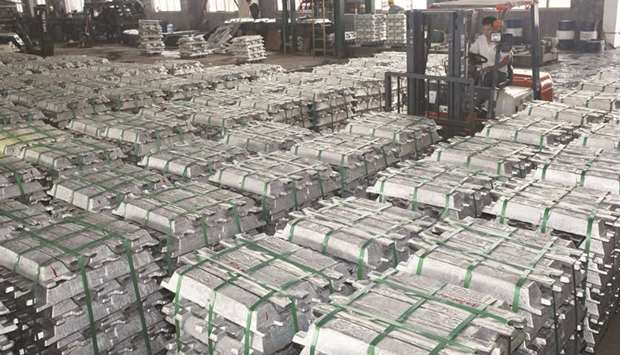
Metals: The latest round of proposed tariffs target several specific categories of steel and aluminium made in China, from seamless casing pipes used in oil and gas drilling to aluminium foil.
Those come on top of broader duties announced last month on imports of the metals from a range of countries including China, meaning that some forms of those products will face a 50% fee to reach the US.
The impact on the global market may be mitigated by the relatively small size of direct metals trade between the countries. China is the 11th-biggest seller of steel to the US and comes in fourth in selling America aluminium.
Aluminium would be hit hardest, but the actual impact will be limited as finished products involve limited amount of the refined metal, according to Jia Zheng, a trader at Shanghai Minghong Investment Co.
The impact of specific tariffs on supply and demand fundamentals “can be over-rated,” Daniel Hynes, senior commodities strategist at Australia & New Zealand Banking Group, said in Bloomberg TV interview.
Aluminium futures fell as much as 1% in Shanghai, while they rose on the London Metal Exchange. Futures for steel reinforcement bar, a product used in construction, added 0.5%.
Aluminium Corp of China rose 0.7% in Hong Kong, as did Baoshan Iron & Steel Co in Shanghai.
Agriculture: China last month announced tariffs on $3bn of imports from the US, including agricultural products from fruit and wine to pork in retaliation to Trump’s initial steel and aluminium duties.
The latest US proposal could also affect American farmers by adding duties on several types of machinery, from wine presses to poultry incubators and milking machines.
The impact may be limited, however, because China doesn’t export much agricultural machinery to the US, according to the China Association of Agricultural Machinery Manufacturers. “China’s own technology is basic and not much is exported to the US,” said Zhang Zhengyun, the association’s office director.
Electricity: Two of the cleaner and fastest-growing sources of power in the US find themselves in the crossfire, as imports of large gas-powered turbines and wind-powered electric generating sets are poised to get pricier.
The US is expected to add 69 gigawatts of new gas-powered generating capacity and 25 gigawatts of wind from 2017 through 2021, according to the Energy Information Administration, combining for 81% of total new capacity.
The renewable energy industry may have more to lose than gas generators since the equipment for a wind farm represents a much larger fraction of overall costs than a turbine in a new gas plant, said William Nelson, a Bloomberg New Energy Finance analyst. “Wind is all capex,” he said.
But once again, the direct impact might be small, as China’s exports of wind turbines to the US have been marginal given high technological barriers, according to BNEF analyst Yiyi Zhou. Chinese wind turbine manufacturers have cumulatively exported about 350 megawatts of wind turbine products to the US in the past 10 years, less than 2% of China’s annual domestic wind turbine installation. Xinjiang Goldwind Science & Technology Co, one of the few Chinese manufacturers exporting to the US, rose 3% in Hong Kong yesterday.
General Electric Co’s natural gas-fired turbines are a popular choice for US generators, and presumably those won’t be affected by the tariffs, said William Nelson, a Bloomberg New Energy Finance analyst. But “there are certainly turbines imported from overseas, so there’s potential impact here,” he said.
The impact on the battery industry will also be “minimal,” according to GTM Research energy analyst Ravi Manghani, who noted that Trump’s list includes mostly primary – as in non-rechargeable – batteries.
The duties will probably affect companies such as Exide Technologies and Johnson Controls International, which imports lead acid batteries from facilities in China, he said.
Mining and drilling: Oil and gas drilling equipment such as casing pipe and offshore production platforms are targeted in the tariffs, potentially affecting US shale companies. Imports of stainless pipe and tube rose to the highest in nearly three years in January as drillers have brought back rigs that had been shuttered during the oil price downturn in 2015 and 2016.