


HE the Qatar Central Bank (QCB) Governor Sheikh Abdulla bin Saoud al-Thani said the State of Qatar has financial surpluses, be it the central bank’s reserves or in the sovereign fund, that are more than sufficient to live with the unjust siege indefinitely, revealing the stability of the economy and the liquidity position by the end of 2017 and its improvement in 2018, as energy prices increased gradually.
Speaking to Lusail Newspaper, HE the Governor highlighted the strength and flexibility of the Qatari economy. The adequacy of the State’s international reserves in general and that of the central bank in particular, is the surest guarantee of the stability of the exchange rate of Qatari riyal against the US dollar, which reflects the strength of Qatar’s currency and the robustness of the reserves supporting it, HE the Governor said.
His Excellency added that the current account surpluses in the State’s payments’ balance supports this reserves, pointing out that the volume of the international reserves at QCB is good and consistent.
In addition, the size of the foreign currency reserve at the bank is “excellent” and covers the market needs, he added.
HE the Governor said investigations related to the siege countries’ attempts to manipulate the national currency and sovereign bonds are continuing, explaining that the probe is being handled in co-operation with the Public Prosecution and the competent security services where the results will be disclosed as soon as the investigation concludes.
His Excellency added that the QCB took all the required measures and procedures to defend the national currency and to face the siege through close-monitoring of the developments of the crisis, preparing for it by all means available, and addressing the rumours that harmed the economy, especially the financial sector.
HE the Governor said the QCB has permanently established an “emergency committee” to follow up on the procedures in banks to ensure their commitment to global standards and to ensure the implementation of the central bank’s guidelines related to capital adequacy and liquidity.
His Excellency added that QCB takes many measures in this direction, including holding periodical meetings with CEOs of banks in the country, supervising daily liquidity levels and cash transfers in the banking system, performing stress-tests, assuming worst-case scenarios, observing closely movement of foreign currency deposits and transactions and setting emergency plans to face any possible threats.
HE the Governor added that the total assets of 18 banks operating under the supervision of QCB, including seven branches of foreign banks, amounted to nearly QR1373.9bn at the end of 2017 as opposed to nearly QR1271.7bn at the end of 2016 — an increase of nearly QR102.2bn and 8%.
His Excellency also revealed that property rights of these banks reached about QR151.8bn at the end of 2017, compared with about QR140.4bn at the end of 2016, an increase of QR11.4bn and 8.1%.
In addition, profits achieved at the end of 2017 were nearly QR19.7bn, compared to about QR19.0bn at the end of 2016, an increase of about QR 700mn and 3.7%.
HE the Governor said the total volume of issuance (Treasury Bills, bonds and sukuk) issued by QCB last year was worth QR47.5bn, of which QR13.55bn were treasury bills, while the rest were bonds and sukuk (QR18.475bn bonds and QR15.425bn sukuk).
His Excellency expressed his expectation that the issuance of bonds and sukuk will continue during the current year through a quarterly programme and Treasury Bills will continue to be issued on a monthly basis.
With regard to the commitment of financial institutions in the country to the principles of governance, in particular those relating to combating money-laundering and the financing of terrorism, HE the Governor stressed that the QCB issued the first edition of Corporate Governance for Banks in 2008.
The bank revised and updated the instructions more than once, most recently issuing comprehensive instructions in July 2015 that are consistent with the latest international practices in this field, such as the OECD and Basel Rules for Banking Supervision and others, he said.
His Excellency said that these instructions include a special section for Islamic banks, and the QCB is verifying banks’ commitment to these instructions through continuous monitoring and inspection of banks and financial institutions that comply in general with the bank’s instructions. He stressed that Qatari banks were among the first banks in the region to implement the requirements of Basel II and Basel III in response to QCB’s instructions issued as soon as international standards were released, taking into consideration the local environment when issuing the implementation instructions.
The current status and the banks’ compliance with the aforementioned requirements indicate that they are ready for the implementation of Basel IV, but the final decision will be after the issuance of the standard in its final form and after adequate study as there are procedures for the QCB to deal with international standards, His Excellency said.
HE Sheikh Abdullah said insurance companies are one of the most important pillar of the financial sector, pointing out that there are 12 companies operating to meet the insurance needs in the country, including five national companies listed on the Qatar Stock Exchange.
HE the QCB Governor added that the insurance sector has seen a remarkable growth during the last decade, and that growth accelerated in the past five years.
The premiums of the insurance companies operating in the country and supervised by the Qatar Central Bank increased to QR12.6bn in 2016 compared to QR11.3bn in 2015, reflecting the growth in insurance activity.
His Excellency pointed out that all the exchange companies operating in the country have strong financial position with total assets of QR1.9bn at the end of 2017, a growth of 27% year-on-year, adding that there are opportunities for further growth during 2018 in light of the economic development of the country.
HE Sheikh Abdullah pointed out that the QCB is in direct contact with the money exchange outlets to identify their daily needs of foreign currencies, and it also worked in co-ordination with the relevant authorities in the State (Ministry of Interior, General Authority of Customs) to facilitate the procedures of importing currencies from abroad and to remove any restrictions or obstacles to the importation of those currencies.
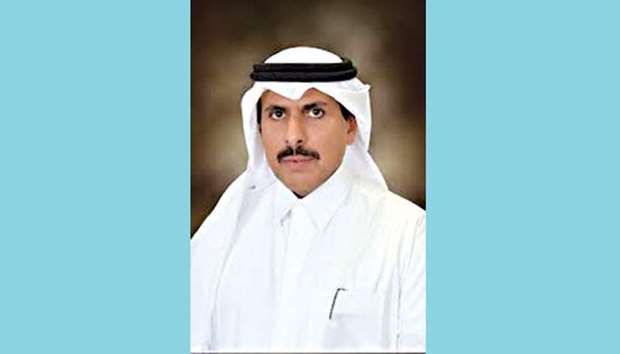
HE Sheikh Abdulla: Strong position.