


Philippine farmers, fishermen and indigenous peoples yesterday called for the closure of polluting coal plants and for “carbon major” companies to help mitigate the impacts of climate change on their lives.
The pleas were made in the first hearing of an inquiry by the Commission on Human Rights on a 2015 petition accusing global oil, mining and cement companies of human rights violations by contributing to climate change.
“We can no longer ignore the impact of significant changes in global temperatures and the rising sea levels on people’s lives,” said Chito Gascon, head of the commission.
“We have been witness ourselves in this country to a spate of natural disasters and super typhoons...with grave consequences,” he added.
Rica Diamzon Cahilig, a 20-year-old member of an indigenous community in the province of Bataaan, said climate change had severely affected the output of his family’s farm.
“There are three coal plants in our province, and now they are building one more,” she told the hearing.
“This has to stop now. We need to replace these plants with renewable energy sources. We can use solar power, let’s get energy from the sun.”
The large companies targeted by the action were not present at the hearing yesterday.
At least seven companies have made written submissions, outlining steps they are taking to curb emissions. Others have questioned the commission’s jurisdiction.
Farmer Felix Pascua Jr lamented that his farming community in the province of Nueva Ecija had been struggling to feed their families due to declining agricultural outputs.
“We are farmers who produce food for everyone, and we’re supposed to be able to feed our families, but we are the ones who don’t have enough food,” he said. “It’s unfair that we, who don’t contribute to climate change, are the ones suffering... It’s unfair that these multinational companies, who are the ones destroying the environment, are earning huge profits,” he added. Environmental group Greenpeace said the investigation “has the potential to shift global understanding of corporate responsibility for climate change, bringing attention to the role of fossil fuel companies in creating the climate crisis.”
“Justice must be delivered to the communities living on the frontlines of the climate crisis,” said Amalie Obusan, country director of Greenpeace. “It is the fossil fuel companies who hold the lion’s share of responsibility for climate change and the harms it creates, and they can and must be held accountable,” she added.
An average of 20 typhoons batter the Philippines every year. In November 2013, Super Typhoon Haiyan killed more than 6,000 people and left more than 1,000 missing in the eastern Philippines.
Haiyan, the worst to hit the archipelago in decades, was one of the most powerful storms in the world to make landfall.
The commission was expected to conduct more hearings in Manila, New York and Paris in the coming months, and aims to complete the investigation by the end of the year.
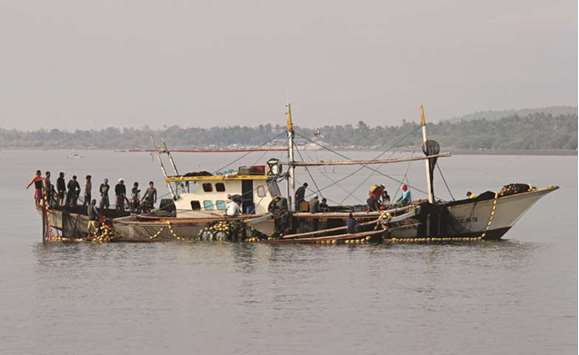
Filipino fishermen sort their nets off the coast of Pinamalayan, Oriental Mindoro.