


Slumping demand for iron ore may cut short the Australian dollar’s fledgling rebound before it even gets off the ground. That could prove a boon to hedge funds that are growing bearish on the currency.
A 2.6% rally for the Aussie to start the month, fuelled in part by US President Donald Trump’s decision to exempt Australia from metals tariffs, has all but disappeared as prices for the nation’s largest export plunged. With analysts expecting further losses for the commodity, the currency looks poised to resume a slump that’s made it the second-worst performer among the Group-of-10 this year.
Shipments of iron ore to China, the world’s largest consumer, are slowing as tighter financial conditions and moderating growth curb demand. That’s helped send the price of higher grade ore plunging 13% over the past three weeks.
Wagers against the Aussie by hedge funds and other large speculators outnumbered bets it will gain for the first time since January last week, according to data from the Commodity Futures Trading Commission.
“The deceleration in iron-ore shipment growth warrants caution against buying AUD,” Bank of America Corp strategists including Adarsh Sinha wrote in a March 14 report. They expect the currency to bottom at 75 US cents in the second quarter, but caution about downside risks to their forecast “if tighter financial conditions, particularly funding costs and a crackdown on leverage, begin to weigh on the Chinese property market.”
That may already be starting, with buying restrictions seen in at least 125 Chinese cities. Home prices rose in the fewest locations in five months in February, data released on Monday showed.
Global trade tensions also limit the Aussie’s appeal, Bank of America said.
Incoming White House economic adviser Larry Kudlow indicated last week the US was readying a larger round of tariffs against Chinese imports following the duties on steel and aluminium. China will take “strong” measures to protect its interests, the Ministry of Commerce said in response.
Even without a fully-fledged trade war, the outlook for iron ore is tenuous, according to Commonwealth Bank of Australia analyst Vivek Dhar. Cold weather and an order for some mills in the Hebei province to suspend production because of smog is also having an impact, he wrote in a report.
“Air quality will continue to guide steel and other industrial output in northern China this year,” Dhar said. “Steel demand concerns, driven by the sharp rise in steel rebar stockpiles, are weighing on iron ore markets.”
Concern is mounting that Chinese steel mills will have a hard time clearing a massive buildup in stockpiles when production starts to crank up this spring. Inventories have reached 159.2mn metric tonnes, the most since at least 2010, according to data compiled by Steelhome.
That bodes ill for an Aussie that’s dropped 1.5% this year, the worst performance among its major peers after the Canadian dollar. The currency fell to 76.87 US cents, the lowest since December.
“AUD/USD is looking overstretched in terms of its fundamental valuation, especially given declining iron ore prices,” said David Forrester, a strategist at Credit Agricole’s corporate and investment-banking unit in Hong Kong. “China is cutting back on steel-making capacity for its own reasons – environmental and deleveraging the economy.”
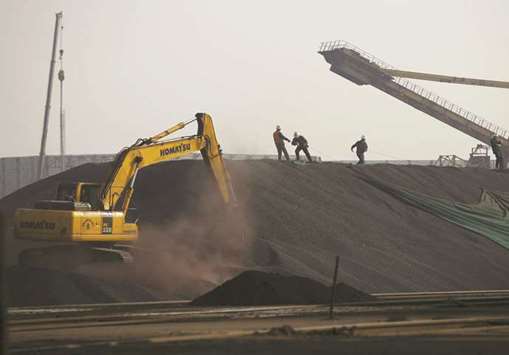
Labourers work on a pile of iron ore at a steel factory in Tangshan, China (file). Slumping demand for iron ore may cut short the Australian dollar’s fledgling rebound before it even gets off the ground.