


The United States has warned that the fight against the Islamic State (IS) was far from over, even after the terror network’s defeat in the Iraq and Syria and the liberation of Marawi City from its sympathisers in the Philippines.
Nathan Sales, US State Department counter-terrorism co-ordinator, pointed to the IS presence in the Southeast Asia, the most visible example of which was the Maute terror group’s five-month siege of Marawi City.
“Fortunately, the Philippines were able to take back and liberate that territory with the assistance of the US and other in the international community,” said Sales in a telephonic press briefing on Thursday.
The US State Department and the Department of Treasury designated the Maute group as a “foreign terrorist organisation” on Tuesday, barring Americans from dealing with them.
Sales’ statement came after Australian Ambassador to the Philippines Amanda Gorely told Manila Times in an interview the terrorists responsible for the Marawi attack were far from finished fighting and might be regrouping to strike again elsewhere.
Sales declined to comment on the Australian envoy’s statement but noted that the IS’ Philippine sympathisers were one of the terror network’s most ambitious affiliates, and were likely to regroup after the loss they had suffered.
Sales said liberating Marawi city was not enough.
Governments should address the conditions that could contribute to the rise of terrorist organisations in the Philippines and other countries, he said.
“ISIS fighters, ISIS ideologues, ISIS recruiters are still active. Some are active in the Philippines, some are active in other countries and so the US and the State Department in particular are looking very closely in what we can do,” he added, using another acronym for IS.
Sales said it was important for the US and its allies to be able to spot IS fighters as they cross international borders, through passenger name records (PNRs).
The US has moved into a new phase in the fight against terror, from military solutions to law enforcement solutions, with three key tools in defeating terrorists, namely: terrorist designation, biometrics and PNRs.
He said US needed to supplement its military efforts to defeat IS with civilian measures that could ensure the group’s defeat.
“ISIS is an adaptive threat and we need to adapt along with it to keep our people safe,” Sales said.
As for the Philippines, the US was looking at other types of partnerships to include border security, improved information sharing and law enforcement co-ordination.
“It is a vital interest of the US to make sure that a partner like the Philippines is protected against terrorist organisations like the Maute group and the local ISIS network,” he said.
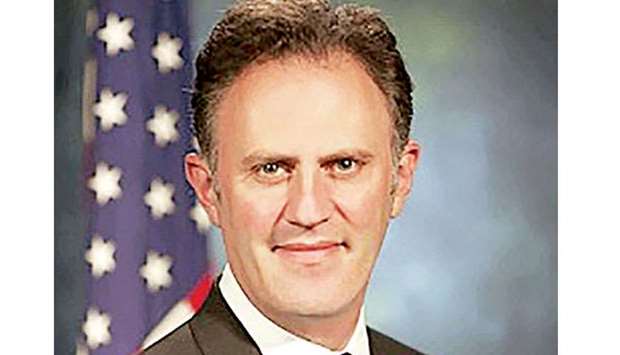
Nathan Sales