


Investors have raised the bar for Mark Carney, boosting the chance the Bank of England governor fails to meet their lofty expectations this week.
Since the start of 2018, investors have priced in an increasingly aggressive path for UK interest rates. Despite paring expectations amid the global market slump in recent days, they still assign more than a 50% chance to a hike in May and see more than three hikes across the BoE’s three-year policy horizon, even with Brexit looming next year.
The danger is those expectations may be too high for Carney when he presents the bank’s Inflation Report tomorrow, risking a repeat of the selloff in the pound that followed the BoE’s first hike in a decade in November.
Back then traders’ path for rates was far more modest — with just two more priced in over the next three years. But officials omitted language they had used previously saying markets were underpricing the rate trajectory. The pound tumbled 1.4% that day, and 10-year gilt yields fell eight basis points — the biggest drop since 2016’s rate cut.
For Jane Foley, head of currency strategy at Rabobank, heightened expectations this time around increase the chance of Carney falling short.
“There will be a majority of people anticipating him to be a bit more hawkish,” she said. “If that doesn’t come the market will be disappointed.”
The shift in the market’s outlook — from the previous consensus of no move until the final quarter of 2018 — follows upbeat growth and labour-market data. Carney also delivered a less pessimistic view of the economy in appearance before Parliament last week.
While expectations have slipped from higher than 60% earlier this week, investors still see at least a 50% chance of a move in May, rising to almost 80% in August — up from 39% and 65% on January 2. Economists are also more bullish. In Bloomberg’s latest survey, 13 out of the 32 respondents predicted a May increase, more than any other month, while a further five see a move in August. Some, including the EY Item Club, even see two hikes in 2018.
The pound may be more susceptible to a drop this week given its moves so far in 2018. The currency climbed more than 5% against the dollar in January, its best start to the year on record, and hedge funds are the most bullish on the currency since 2014.
The UK currency has fallen about 2% since stocks started slumping on Friday but, at about $1.40, it’s still up from $1.3245 the day before the BoE’s November hike.
The hawks’ case is also made more complicated by Brexit. UBS Group, one of the banks to switch their forecast to May last week, did so on the condition that a transition period for the time after Britain leaves the European Union is worked out soon. Officials have also said that negotiations may have policy implications in either direction.
That makes it more difficult for investors to lock in a path of rates, and boosts the prospects of Carney tempering any hawkish shift.
“In November there was definitely some positioning in the market hoping to get the green light to really price in a bull hiking cycle — they didn’t give that,” said Andy Chaytor, head of European rates strategy at Nomura International, which expects four hikes over the next two years. With Brexit hanging over the UK “is it clear we’ll get that in February? I wouldn’t say it’s necessarily clear.”
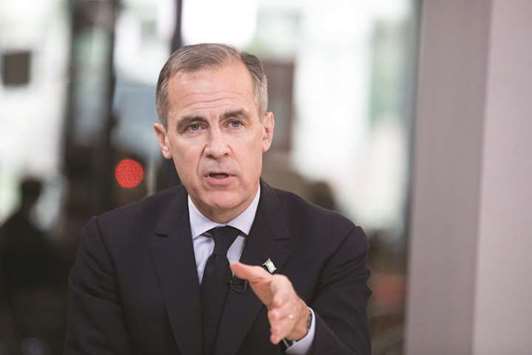
BoE governor Mark Carney gestures while speaking during a Bloomberg Television interview in Paris. The danger of rate hike expectations by investors may be too high for Carney when he presents the bank’s Inflation Report tomorrow, risking a repeat of the selloff in the pound that followed the BoE’s first hike in a decade in November.