


A leading eurosceptic in Prime Minister Theresa May’s Conservative party has warned her against agreeing to a u201cBrexit in name onlyu201d, adding to the pressure she faces from both pro-Brexit and pro-EU lawmakers in her party.
A leading eurosceptic in Prime Minister Theresa May’s Conservative party has warned her against agreeing to a “Brexit in name only”, adding to the pressure she faces from both pro-Brexit and pro-EU lawmakers in her party.
“If the Conservative party doesn’t deliver the Brexit that the British people voted for, the Conservatives will not win the next election,” right-winger Jacob Rees-Mogg told the pro-Conservative Daily Telegraph.
Rees-Mogg gave May his “full support” but said “the party is more important” than is leader.
“Brexit is more important than anyone other than the queen,” the eurosceptic remarked.
“I’m against ‘Brino’ (Brexit in name only),” he said, accusing Chancellor of the Exchequer Philip Hammond of “obstructing Brexit”.
In an open letter to business leaders yesterday, Hammond and two other ministers promised that a transitional period of “around two years” after Brexit would see “access to one another’s markets continue on current terms”.
That access “will need to be based on the existing structure of EU rules and regulations”, said the letter, which was co-signed by Brexit Secretary David Davis and Business Secretary Greg Clark.
“Our intention is to mimic the breadth of our current arrangements, from goods to agriculture to financial services, meaning that every business, small or large, will be able to go on trading with the EU as it does today,” they said.
They added that EU citizens “will continue to be able to come and live and work in the UK, with no new barriers to taking up employment”.
Rees-Mogg, who chairs a group of some 60 eurosceptic Conservatives, earlier urged May not to be “timid and cowering” in the Brexit negotiations.
“For Jacob Rees-Mogg, the gloves are finally off,” the Telegraph commented on his interview published yesterday.
In a separate article, the newspaper said May faces a “challenge to [her] leadership and Brexit strategy” from eurosceptic lawmakers.
Rees-Mogg’s remarks follow a row in the party after Hammond said he hoped Britain’s post-Brexit trading relations with the EU would change only “very modestly” immediately after Brexit.
Hammond insisted he had only made the point that the government wants to “minimise any reduction in access” after Brexit.
The divisions are likely to be sharpened next week when May’s EU withdrawal bill heads for a second reading in the Lords, parliament’s unelected upper house.
The bill is expected to come under fire from both Conservative rebels and opposition lawmakers who want Britain to remain in the EU single market and customs union.
The elected lower house, the Commons, approved the bill earlier this month but the rebels warned May that it is likely to be much harder to push the bill through the Lords without significant amendments.
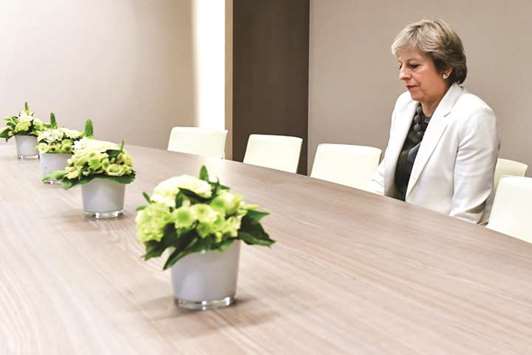
May: faces a ‘challenge to [her] leadership and Brexit strategy’ from eurosceptic lawmakers.