


The Argentine central bank’s attempts to tighten lending conditions and rein in inflation have hit a snag – the bank’s own success in reviving the moribund mortgage market that has unleashed years of pent-up demand for housing credit.
As part of a broader tool kit to jump start the mortgage sector, central bank president Federico Sturzenegger introduced in March 2016 an accounting unit, known as UVA, that’s linked to inflation. The unit became an instant hit with banks that used UVAs to lend 58.9bn pesos ($3.4bn), mostly to finance mortgages, fuelling a construction boom. That in turn, is undermining the impact of a series of rate hikes.
“The repressed demand for mortgages means that the recovery in credit and the creation of secondary money is higher than is consistent with lowering inflation,” Juan Manuel Pazos, head strategist at Puente Hnos SA, said in an interview in Buenos Aires. “The growth in credit isn’t consistent with the central bank’s monetary policy.”
The UVA accounting unit offers banks security on loans in a country that has battled with high inflation for decades, and where price growth remains stubbornly above the central bank’s 17% target for this year. The unit may remain a driver of growth for years to come. The mortgage market is expected to reach 12.2% of gross domestic product by 2027 from its current 1%, according to Morgan Stanley.
With consumers willing to pay as much as 7% in real terms over 30 years for access to mortgages for the first time, banks are reducing their positions in notes known as Lebacs that the central bank uses to soak up excess liquidity. That means there is a lot more cash sloshing around the economy.
Sturzenegger has celebrated the success of the UVA mortgages, while forecasting that the boom will be short-lived as banks run out of funds from current deposit levels to finance them.
“This year the financial system convinced itself that demand exists for that kind of credit,” Sturzenegger said on November 29. “The banks have satisfied that demand, which explains the strong growth of credit, but they’ve done it using their reserves of liquidity.”
The central bank declined to comment for this article.
Tighter liquidity may force the banks’ hand soon. The lenders plan to raise rates on housing loans by an average of 2 percentage points, La Nacion reported on Monday after speaking to several banks.
That would make life easier for policy makers. The central bank’s key interest rate now stands at 28.75%, while inflation stood at 22.9% in November. Economists have raised their forecast for inflation next year for seven consecutive months and now see prices rising 16.6%, up from an estimated 14%, according to a survey of analysts by the central bank.
That still isn’t low enough for Sturzenegger, who has said he wants to bring inflation to 10% next year.
For now, the housing boom is in full swing. Home building leaped 12.1% in October from a year earlier, according to the Construya index that measures sales by 11 of the largest construction companies.
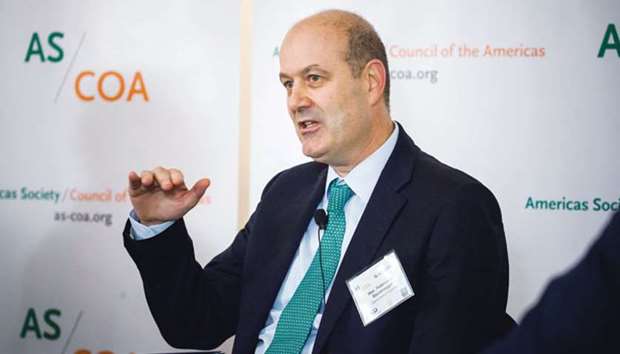
Federico Sturzenegger, president of the Central Bank of Argentina, introduced in March 2016 an accounting unit, known as UVA. The unit became an instant hit with banks that used UVAs to lend 58.9bn pesos ($3.4bn), mostly to finance mortgages.