


 |
|
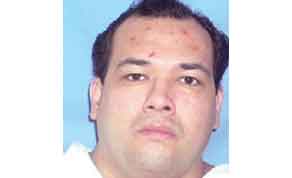
Leal Garcia |
In a case that garnered international attention, the US Supreme Court rejected a last-minute stay of execution on the grounds that Humberto Leal Garcia was not told of his right to diplomatic counsel when arrested.
Leal Garcia, 38, was pronounced dead at 6.21pm CDT (2321 GMT) after he was given a lethal injection at a prison in Huntsville, Texas.
Leal Garcia, who had lived in the US since he was an infant, was convicted of raping a 16-year-old girl and bludgeoning her to death with a piece of asphalt in 1994.
In a last statement provided by the Texas Department of Criminal Justice, Leal Garcia apologised to the victim’s family and asked for their forgiveness.
“I truly am sorry. That is all. Let’s get this show on the road,” Leal Garcia said, according to the transcript. “One more thing, Viva Mexico Viva Mexico”
The Obama administration warned that executing Leal Garcia would violate the Vienna Convention on Consular Relations and leave US citizens traveling abroad at higher risk of arrest without cause or denial of diplomatic representation.
Leal Garcia’s lawyers said Texas authorities did not inform him of his right to consult with Mexican consular authorities and violated the Vienna Convention, which guarantees foreign detainees the right to consult with representatives of their governments when they are arrested.
In legal briefs filed before the Supreme Court, the US government had warned that the execution would create an “irreparable breach” of international law, and Mexico’s government said it would “seriously jeopardise” cross-border cooperation on joint ventures and extraditions.
Mexico strongly condemned the execution, lodged an official protest with the US State Department and sent letters to Texas Governor Rick Perry “underscoring the importance of fulfilling the international obligations”, according to a press release from the Mexican Foreign Ministry.
The Obama administration had sought a temporary stay until January 2012 to allow Congress to weigh legislation that could clarify the rights of foreigners to consular access.
Without new guidance from Congress, the state of Texas is not obliged to honour the treaty after the Supreme Court ruled in 2008 that states don’t have to act absent federal law.
Vermont Senator Patrick Leahy, chairman of the Senate Judiciary Committee, has proposed legislation to give federal courts the jurisdiction to review cases of foreign nationals awaiting execution who were denied consular access.
“We do not want this execution to be interpreted as a sign that the US does not take its treaty obligations seriously,” Leahy said on June 29.
In an editorial titled ‘The World Is Watching’, The New York Times said, “It would be a miscarriage of justice if the Supreme Court allowed Mr. Leal’s execution before Congress could complete that remedy.”
In its majority opinion, the Supreme Court wrote that it was not obligated to act on “hypothetical legislation”.
Billy Hayes, whose five-year ordeal in a Turkish prison in the 1970s was the basis of the movie Midnight Express, warned Perry in a letter that Leal Garcia’s execution could expose US citizens abroad to mistreatment.
“The US stumbled in its commitment to the rule of law,” said Sandra Babcock, Leal Garcia’s attorney. “It is shameful that Mr Leal will pay the price for our inaction.”
Texas executes more criminals than any other US state. That has long caused friction with Mexico, which has no death penalty. In 2002, Texas executed Mexican citizen Javier Suarez Medina over the objections of President Vicente Fox.
In 2008, the case of Jose Medellin, a Mexican citizen convicted of a rape and murder in Texas, went all the way to the US Supreme Court on the issue of whether he was improperly denied consular assistance. He too was executed.