


The mixed report from the Labor Department yesterday comes as Federal Reserve officials have been engaged in a vigorous debate on the inflation path and suggests a December interest rate increase is not a done deal. As a result, the dollar fell against a basket of currencies, while prices for US Treasuries rose.
US stock index futures rose.
Policymakers could, however, find solace from another report indicating that the economy was swiftly recovering from the damage inflicted by Hurricanes Harvey and Irma, with a strong rebound in retail sales last month. “The firmness in retail sales should override the enduring mystery of low inflation to spur a December Fed rate hike,” said Sal Guatieri, a senior economist at BMO Capital Markets in Toronto.
The Labor Department said its Consumer Price Index increased 0.5% last month after advancing 0.4% in August.
September’s rise was the biggest since January and pushed up the year-on-year gain in the CPI to 2.2% from 1.9% in August. The increase in the CPI was broadly in line with economists’ expectations.
Gasoline prices surged 13.1% last month, accounting for 75% of the rise in the CPI.
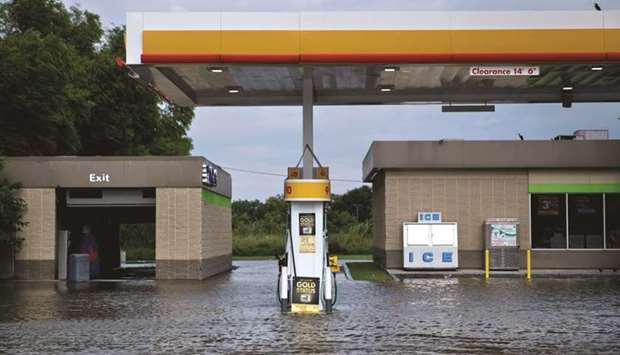
The increase in gasoline prices was the largest since June 2009 and followed a 6.3% advance in August. The Labor Department said Harvey was reported to have impacted refinery capacity in the Gulf Coast and was likely a factor in last month’s increase in gasoline prices.
Outside gasoline, price pressures were benign.
Excluding the volatile food and energy components, consumer prices gained 0.1% in September as the increase in rental accommodation slowed and the cost of new motor vehicles and medical care declined.
The so-called core CPI rose 0.2% in August.
In the 12 months through September, the core CPI increased 1.7%. The year-on-year core CPI has now increased by the same margin for five consecutive months.
The Fed tracks the personal consumption expenditures (PCE) price index excluding food and energy.
The core PCE has consistently undershot the US central bank’s 2% target for more than five years.
Fed Chair Janet Yellen has said that temporary factors such as one-off price cuts by wireless telephone companies are holding back inflation.
Minutes of the Fed’s September 19-20 meeting published on Wednesday showed “many participants expressed concern that the low inflation readings this year might reflect not only transitory factors, but also the influence of developments that could prove more persistent.”
Last month, food prices rose 0.1% after a similar gain in August. Owners’ equivalent rent of primary residence rose 0.2% after advancing 0.3% in August.
Prices for new motor vehicles fell 0.4% as manufacturers resort to deep discounting to eliminate an inventory overhang.
There were also decreases in the cost of medical care, apparel, and household furnishings.
But the cost of mobile phone services rose 0.4% after 14 straight months of declines.
In a separate report yesterday, the Commerce Department said retail sales jumped 1.6% in September likely as reconstruction and clean-up efforts in areas devastated by Harvey and Irma boosted demand for building materials and motor vehicles.
Retail sales were also buoyed by a surge in receipts at service stations, which reflected higher gasoline prices. Last month’s increase in retail sales was the largest since March 2015.
Photo taken on August 30 shows a flooded gas station during the aftermath of Hurricane Harvey in Houston, Texas. Gasoline prices surged 13.1% last month, accounting for 75% of the rise in the CPI. The Labor Department said Harvey was reported to have impacted refinery capacity in the Gulf Coast and was likely a factor in the increase in gasoline prices.