


The efficient movement of people is
crucial for any society. When transportation networks function well,
they drive economic development and literally bring people together. But
in many parts of the world, mobility is a matter of life and death; it
is dirty, unsafe, and chaotic. Pollution and congestion from trucks,
buses, and cars are daily hazards for millions, especially in emerging
countries.
Fortunately, big changes are coming to how humans move.
For the first time since the mid-19th century, when the modern internal
combustion engine was invented, its demise is within sight. Car
manufacturers have announced plans for scores of electric models, and
politicians in several European countries have put an expiry date on
gasoline and diesel cars, with leaders in India and China aspiring to do
the same.
Companies around the world are making bold predictions
that electric mobility is the future of transportation. Even those with
the most to lose from a shift away from fossil fuels understand that
electric vehicles (EV) are inevitable. In July, even Ben van Beurden,
the CEO of Shell, conceded that his next car will be electric.
More
people are arriving at the same conclusion, and those of us who have
been championing EVs as one of the solutions to climate change are
optimistic that a tipping point is approaching. Sales of electric cars
have increased dramatically in recent years; some 750,000 were
registered in 2016 – nearly half in China.
Still, it is human nature
to resist change, and many prospective buyers remain hesitant. That is
why addressing consumption bias must be the highest priority over the
next few years. Several changes are needed to ensure that growth in EV
usage and sales continues.
For starters, consumers must overcome the
belief that zero-emission mobility is only for wealthy people in
developed countries. Every year, 6.5mn people die from polluted air, and
92% of the world’s population lives in places where the air is unsafe
to breathe. Vehicle emissions are a major contributor to dirty air
everywhere. Investing in electric mobility and infrastructure –
including electrified public transportation, charging stations, and
electric car-sharing programmes – will help, not hurt, development.
Support
for such investments requires people to reject the false promise of
“clean” fossil fuels. Some industry officials insist that electric cars
are not ready for mass rollout, and that a better solution would be to
build more efficient gasoline and diesel engines. This is the story we
hear most often from car dealers in Latin America. But such views are as
inaccurate as they are self-serving.
I have been fortunate to
experience firsthand what electric mobility feels like, and how it is
superior to gasoline- and diesel-only cars. I’ve travelled for thousands
of miles across several countries on all-electric road trips. Once a
driver experiences the clean, silent, and powerful technology, it is
difficult to hand back the keys. Governments and consumer groups
everywhere must work together to put more people behind the wheel of
these inspiring vehicles.
Finally, we must address the structural
imbalances that persist in our transportation policies. Simply put,
those who suffer most from “dirty” mobility have the weakest political
voice. For example, data from the United Kingdom show that it is often
the poorest people that walk or take buses. Development of zero-emission
public transit, therefore, is rarely a top priority for government
leaders. To sway them, advocates must sharpen their defences of the
economic and social benefits of zero-emission mobility, such as the
positive effects on public health.
Changing course will take time. In
Costa Rica, my organisation is working to encourage businesses and
governments to sign an “electric mobility pact” to encourage investment
in EV infrastructure. In early 2018, we will open an online registry,
and by the end of next year, we aim to have 100 public and private
organisations on board. Costa Rica’s legislature is also debating a bill
to provide tax incentives for electric transportation.
Others in
Latin America are finding their own ways to promote electric mobility.
In Chile, for example, the focus is on solar power and the link between
mining and EV manufacturing.
But political changes alone will not
push EVs into the fast lane. To do that, customers will need to embrace a
new clean-mobility narrative. In Costa Rica, we pride ourselves on the
fact that nearly all of our electricity is produced by renewable
sources, including hydroelectric, geothermal, and wind. This gives us an
incentive to lead the global transition from gas-powered vehicles to
electric cars, buses, and trains. We Costa Ricans are striving toward
“un pa?s sin muflas” – a country without exhaust pipes. Expanding that
goal globally is the ultimate objective.
To be sure, pushing the
electric engine past the gas-powered relic will remain an uphill battle.
But new technologies, like better batteries and speedier charging
stations, will help accelerate the transition. Just like the CEO of
Shell, I, too, believe that the transition to electric mobility is
inevitable. What we see on the roads today is just the beginning. –
Project Syndicate
* Monica Araya is founder and Executive
Director of Nivela, leads the citizens group Costa Rica Limpia, and is
Vice President of Costa Rica’s Electric Mobility Association.
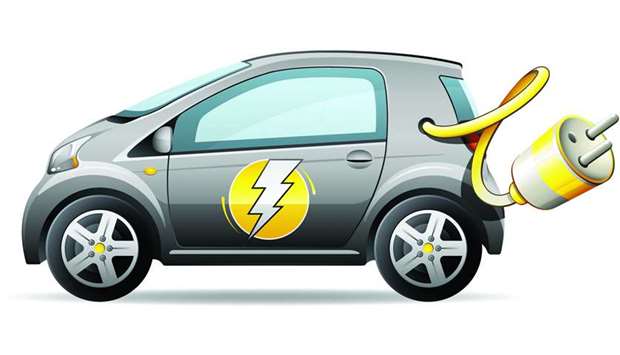
Sales of electric cars have increased dramatically in recent years; some 750,000 were registered in 2016.