


Qatar University (QU) will celebrate today and tomorrow the graduation of its 40th batch of male and female students at Qatar National Convention Centre (QNCC). The batch comprises 4,000 students.
Of the total number of graduating students, 1,000 are males and 3,000 are females.
The QU has opened up a wide range of sciences and knowledge for graduating students and provided the country with the competencies that occupy prestigious positions in all workplaces in the country in line with the comprehensive renaissance of the Qatari society and to achieve Qatar National Vision 2030 which was adopted by His Highness the Emir Sheikh Tamim bin Hamad al-Thani.
Since its inception in 1973, QU has succeeded in graduating students and qualified leaders capable of making the future of their homeland and nation.
The number of graduating male and female has so far reached more than 41,000 students.
The QU has become the country’s national and major institution for higher education.
It provides quality education with global standards and it is the fastest-growing university for research in the region.
Today, Qatar University offers about 79 undergraduate and postgraduate programmes and comprises nine colleges namely Arts and Sciences; Business and Economics; Education; Engineering; Law; Pharmacy; and Sharia and Islamic Studies; Medicine and Health Sciences.
The College of Arts and Sciences is one of the largest faculties of the university and offered Bachelor degree programmes and postgraduate programmes.
It has 10 academic units, 17 bachelor’s programmes and six graduate programmes.
The College has seven programmes that have international academic recognition from international bodies.
The Business and Economics is a leading academic college with four academic departments, four bachelor’s programmes and two graduate programmes in addition to an executive programme.
It has partnerships with major business organisations in the State of Qatar.
The Centre for Entrepreneurship at the College offers a variety of entrepreneurial research where the Centre focuses largely on involving the university in studying various aspects of commercial and economic activities.
QU’s College of Education is the first institution of higher education in Qatar and the only institution for teacher preparation.
It has two academic departments, two bachelor’s programmes, each with its own specialisations, and two post-graduate programmes in addition to four Post-Bachelor Diploma programmes.
The college has received academic accreditation from the International Agency for Teacher Education programmes (IRTE) a year ago.
The college works to address important educational issues and contributes to the achievement of Qatar National Vision 2030 goals and the country’s quest to establish a knowledge-based economy of the highest international quality standards.
Qatar University’s College of Engineering is one of the leading colleges offering excellent opportunities for innovative learning and research.
It seeks to educate its students and develop their abilities to succeed as engineers in the engineering world and in postgraduate colleges.
The college includes seven academic departments, nine bachelor’s programmes and eight graduate programmes.
It has received academic accreditation for seven of its programmes by the US Accreditation Board for Engineering and Technology (ABET). Its faculty members, students and researchers conduct a wide range of researches in many areas.
QU also includes the College of Health Sciences (CHS), which was founded in 2016.
It is the national provider of quality health education and research in Qatar.
It also offers undergraduate programmes in Biomedical Sciences, Human Nutrition and Public Health, as well as postgraduate programmes in Biomedical Sciences and Master in Public Health.
Qatar University College of Law is committed to providing students with a distinctive legal education that helps them to achieve unparalleled professional success.
The college offers a Bachelor degree in law (LLB), as well as a Master degree in Public and Private law.
Among the faculties of the university is the College of Medicine, which is QU’s eighth college and was founded in October 2014.
It admitted the first cohort of students in Fall 2015.
The college was established to meet the basic needs of Qatari society.
It is also fully aligned with Qatar’s national strategies in Education and Health.
The College of Pharmacy is the first and only pharmacy degree programme in the State of Qatar.
The college currently has three accredited academic programmes with a university degree that provide the necessary knowledge and skills to pursue a successful career in pharmacy and pharmaceutical sciences.
It has been awarded the status of Full Accreditation for its Bachelor of Science programme in Pharmacy for the six-year term 2012 - 2018 and the status of Full Accreditation for its Doctor of Pharmacy programme for the four-year term January 2014-December 2018.
The mission of the college is to create and disseminate a knowledge that is related to pharmaceutical institutions and products in order to improve health outcomes and quality of life.
The College of Sharia and Islamic Studies aims at achieving a distinctive model in Islamic studies that are still related to modern curricula through the development of emerging disciplines.
The college consists of two academic departments, two bachelor programmes and two postgraduate programmes.
Qatar University has a number of research Centres including, the Centre for Advanced Materials (CAM), Environmental Science Centre (ESC) and Gas Processing Centre (GPC), Qatar Road Safety Studies Centre (QRSSC), Social and Economic Survey Research Institute (SESRI), Laboratory Animal Research Centre (LARC), KINDI Centre for Computing Research (KINDI), Biomedical Research Centre, National Centre for Educational Development (NCED), Early Childhood Centre, Centre for Humanities and Social Sciences (CHSS), Centre for Entrepreneurship (CFE), the Gulf Studies Centre and the Centre for Energy and Sustainability Law.
QU has changed the landscape of higher education in the State in recent years, as competition among outstanding students and their requirements have been increased.
Accordingly, it is imperative for Qatar University to keep pace with this development, not only in response to these requirements, but also in order to achieve excellence in various fields.
As Qatar University celebrates the graduation of the 40th batch of its students, the university continues to enhance its academic role in supporting the general orientation of the country, which is represented in the transition towards a knowledge-based economy in accordance with the Qatar National Vision 2030, by focusing on scientific research and providing all the disciplines and programmes needed by the growing labour market.
The graduation of the 40th batch is an evidence of a long record of achievements and years of hard work done by the university which achieved distinguished positions among universities internationally and regionally and many of its colleges and programmes obtained academic accreditation.
Qatar University’s laboratories and departments also obtained the certificate of the International Organisation for Standardisation (ISO ) which was reflected positively on the level and efficiency of the university’s graduates.
QU has also been ranked 349 in the Quacquarelli Symonds (QS) World University Rankings 2018, improving on its 2017 performance by 44 places.
The QU ranks 4th in the GCC and 5th in the Arab region.
It also has been ranked 37 in the “QS Top 50 Under 50 2018” ranking among the world’s leading young universities founded less than 50 years ago.
Moreover, QU has been ranked among the world’s top 500 universities in the Times Higher Education (THE) World and ranked No 6 also in THE Top 15 Arab World Universities Ranking.
Today will be a national event for the State and its citizens as the country will celebrate the birth of a new constellation of graduates.
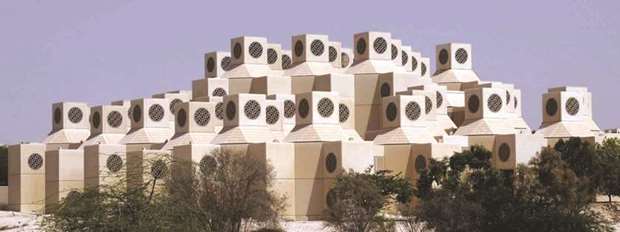
Qatar University: the country’s national and major institution for higher education.