


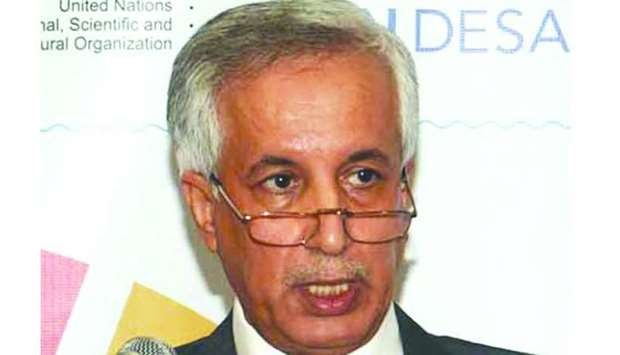
The Minister of State for Foreign Affairs HE Sultan bin Saad al-Muraikhi has reiterated that Qatar will remain committed to working within the framework of the Global Counter- Terrorism Forum and bilateral relations, and with all international organisations in the fight against violent extremism.
Addressing the Eighth Ministerial Meeting of the Global Counter-Terrorism Forum held in New York on the sidelines of the 72nd Session of the United Nations General Assembly, the minister said Qatar had provided $5mn in financial support to the Global Community Engagement and Resilience Fund (GCERF), which addresses the root causes of violent extremism. He also stressed that Qatar is one of the largest donors and the only Arab member of the fund, noting the next meeting of the fund will be held in Doha from December 5-6.
The minister reviewed the steps and measures taken by the Government of Qatar recently, as it continues to strengthen military and security cooperation, and supports the US-led International Alliance against the ISIS group.
He stressed Qatar's keenness to strengthen bilateral co-operation to combat terrorism and deprive terrorist groups of funding sources, referring to the bilateral agreements signed by Qatar, including the memorandum of understanding (MoU) signed last July with the United States to combat the financing of terrorism, besides making certain related arrangements with countries such as Germany, France and the UK.
HE al-Muraikhi also referred to the measures taken by Qatar to strengthen the Anti-Money Laundering (AML)/and anti-terrorism financing system and to ensure that the best international standards are in place to achieve financial integrity.
Qatar continues to update national laws and regulations related to the fight against terrorism and its financing in order to cope with any emerging terrorist challenges, the minister underlined, referring in this context to the issuance of the law on the definition of terrorists, crimes, acts and terrorist entities, the freezing of funds and the financing of terrorism and the establishment of the National Lists of Terrorist Individuals and Entities, where this law determines the listing procedures and the right of the concerned parties to challenge the decision before the Court of Cassation.
HE the minister pointed to the promulgation of the Law on the Prohibition of the Illegal Use of Electronic Means for Terrorism-Related Purposes and the promulgation of the Law on the Organisation of Charitable Activities, which would prevent misuse outside the humanitarian objectives for which it was established.
HE the Minister of State for Foreign Affairs referred to the technical expertise achieved as a result of Qatar's efforts and its cooperation with the United Nations and regional counter-terrorism partners in capacity-building, including the development of youth skills to keep them away from extremism and exploitation by terrorists, noting that the next stage will witness the implementation of specific programmes in this regard.
At the end the minister stressed that the defeat and the drying up of terrorism requires an effective and binding international strategy that takes into account the roots and causes of extremism, especially poverty, ignorance, unemployment, marginalisation and other human rights violations. "No country can act independently of each other in this confrontation," he concluded, stressing the need to develop tools to address the scourge of terrorism and to strengthen plans that keep abreast of the evolution and continuous change in the work of terrorist organisations.