


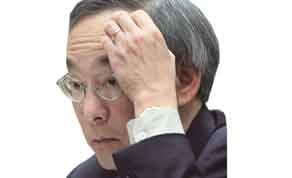
 The US will have to take a more serious look at the safety of new nuclear plants that could be constructed in the coming years, US Energy Secretary Steven Chu said yesterday.
But Chu in testimony before Congress also reaffirmed that US President Barack Obama’s administration still supported the development of nuclear power.
Obama has sought $36bn in loan guarantees for building new power plants, but the US nuclear regulator has yet to approve any of the new construction projects that are pending.
“Based on the events in Japan, we need to look harder at these projects and guarantee that they can go forward in a safe way,” Chu told the House of Representatives Energy and Commerce Committee.
The US gets about 20% of its electricity from nuclear power, but has not built a new plant since the 1970s. About 20 new plants are seeking construction permits.
Asked if Obama still stood by nuclear power as part of the US energy mix, Chu responded: “Yes.”
Chu insisted that US plants remain safe and announced no additional safety measures, though he said the US was “committed to learning from Japan’s experience as we work to continue to strengthen America’s nuclear industry.”
Reaction in Congress has been muted, with even sceptics reluctant to use Japan’s crisis to call for a halt in the development of nuclear power. At most, greater attention has been paid to two nuclear power plants in California that are near earthquake fault lines.
The European Union by contrast has been engaged in a sharp debate over nuclear safety and on Tuesday said it will conduct “stress tests” of its power plants. Germany has taken the toughest approach, temporarily shuttering plants built before 1980 until the problems in Japan are better understood - and lessons can be drawn.
Like much of the world, the US has long had an uneasy relationship with nuclear power.
But the Japan crisis comes just as the nuclear power industry had been witnessing something of a resurgence. Obama has backed $36bn in government loans for the construction of new nuclear plants, as public acceptance of the power source has grown.
No new power plants have been built in the US since the 1970s, a reaction to the partial meltdown in 1979 of a nuclear reactor at the Three Mile Island plant in Pennsylvania, the worst accident in the history of the US nuclear industry.
Three Mile Island undermined public support for nuclear power. Approval fell further, to just one third, in the years after the 1986 full meltdown of the Soviet Union’s Chernobyl plant in Ukraine, considered the worst nuclear disaster in world history.
The public’s view of nuclear energy has made a steady rebound in recent years, climbing to about 60% in favour according to a May 2009 Gallup opinion poll.
US politicians have followed that public momentum, with prominent policymakers including former presidential candidate John McCain spearheading efforts to put nuclear power back on the energy agenda.