


Swiss trading houses are muscling in on the global market for liquefied natural gas, until now the preserve of energy giants, and expect to grab a $10bn share of the rapidly growing business this year.
Trafigura, Gunvor, Vitol and Glencore are all shaking up a decades-old system dominated by Western oil majors and state energy producers which sell LNG directly to large consumers on long-term contracts.
They plan 2017 shipments that will be more than triple the 2015 level, according to Reuters calculations based on figures for the four traders provided by trade sources.
“The trade houses...are not fringe players any more,” said Trafigura’s head of LNG Hadi Hallouche. “In the next four or five years there will be a significant amount of supply contracts expiring and that will open up the market.”
In the short term, the Swiss traders may prove useful to producers such as Royal Dutch Shell and Qatargas by finding new buyers in emerging markets and easing a glut in the market.
But they are determined to challenge the LNG establishment, and have set their sights on supplying not only the fastest-growing consumers like China, India and Pakistan but also the largest, such as power utilities in Japan and South Korea.
The big buyers remain largely locked into long-term deals designed to ensure the producers get a return on their multi-billion dollar LNG investments.
Traders believe they can bring greater liquidity, flexibility and efficiency to the market. “It will be in the interest of sellers and end users to allow trading companies to compete for access to production,” Hallouche said.
Overall, the four Swiss traders expect to deliver over 25mn tonnes of LNG this year, up from 7mn two years ago.
Smaller rivals such as Hong Kong-based Noble Group and Dubai-based BB Energy should push the total above 30mn tonnes per annum (mtpa).
Many countries are hungry for gas as a lower carbon, less polluting alternative to oil and coal for generating power.
With pipeline supplies either limited by capacity or impractical, LNG — where gas is cooled to a liquid for delivery by sea — has become the fastest growing traded commodity.
Numerous LNG projects, conceived before the 2008 financial crisis slowed world economic growth, are starting production.
Between 2015 and 2020, global supply will grow by 135 mtpa or nearly 50%, Bank of America Merrill Lynch forecasts, largely from plants in Australia and the US.
However, an expected leap in US import demand has failed to materialise as buyers opt for gas from domestic shale deposits.
The resulting glut has pushed spot prices down by 70% from a peak in early 2014, giving the traders their chance to gain a foothold.
“The days of producers having nice cozy 25-year supply deals with buyers won’t disappear altogether,” David Fyfe, Gunvor Group’s chief economist, told Reuters. “But what traders bring is a mechanism to absorb oversupply and find markets that traditional producers might not have considered.”
LNG production is set to hit 293mn tonnes this year, according to independent LNG consultant Andy Flower.
That means the traders will deliver 8.5% of global supply.
They won’t be content with this. “I would be surprised if Swiss trade houses’ share of delivered LNG didn’t double in the next three years,” said Otto Waterlander, senior oil and gas partner at McKinsey & Co. On top of supplying 50 mtpa, he forecast they may buy and sell almost double that among themselves, boosting market liquidity.
Over-investment in new production has undercut the producers’ dominance and traders are mopping up the surplus at prices often below the cost of production.
Trafigura leads by volume, expecting to deliver around 7.5mn tonnes this year, a trading source told Reuters.
Gunvor will raise its LNG shipments this year substantially from the nearly 4mn tonnes it delivered in 2016, another source said, putting it not far behind Trafigura.
Vitol plans to raise 2017 volumes to at least 7mn tonnes, according to a presentation to customers earlier this year, from less than 3mn in 2016.
Glencore’s new team is to rack up around 3.5 mtpa.
All four are used to working in politically complex markets involving high credit risks.
So far they have concentrated on customers such as Egypt and Pakistan, countries with rapidly rising energy needs due to high population growth.
Some are moving beyond trading, seeking stakes in LNG production and leasing capacity in facilities such as floating import terminals, which are far cheaper than those on dry land.
“Floating terminals are nimbler, can be moved around and give buyers prompt access to LNG for however long they wish,” said Fyfe. “Emerging markets that may have shied away from the massive investment required for importing LNG before can now tap supplies...for five to 10 years, encouraging more buyers to enter the market.”
Trafigura and Gunvor are involved in floating terminals in Pakistan, and Gunvor struck a deal in January to supply the country for five years.
Traders are also targeting more established markets.
While major Chinese importers mainly have long-term contracts, a number of new players in the country such as ENN and Guanghui Energy Co Ltd are increasingly in the market for LNG.
Developed economies also offer opportunities, including Britain which relies heavily on Norway for gas and Qatar for LNG.
Trafigura hopes to reopen a defunct LNG import terminal in northeast England, which could also supply the continent by pipeline.
Competition is stiff in securing supplies, including using the relatively untested technology of floating production platforms.
Last month, Gunvor beat Vitol to take output from Africa’s first deepwater floating LNG project in Equatorial Guinea for 10 years.
It offered to help finance state-run Sonagas’s 30% stake in the $2bn scheme, marking the first time a trade house has helped bankroll an LNG project.
Gunvor is also the first trading house with access to long-term LNG supply, obtained from Russia’s Yamal project, industry sources said. This will start exports later this year.
Vitol has secured a multi-year supply deal with Angola’s sole LNG export project, which is led by Chevron.
Originally the plant was supposed to supply the US under long-term deals but these never materialised due to the shale gas boom and technical problems.
While emerging markets offer rapid growth, Egypt, for instance, piled up payment arrears of half a billion dollars last year.
Some industry figures believe similar problems will crop up among the new batch of LNG importers.
Pakistan’s sovereign credit rating, for instance, is deep in junk territory.
By contrast Japan’s JERA, a tie-up of Tokyo Electric Power Co and Chubu Electric, which is the world’s biggest LNG buyer, has a high investment grade rating, as does the global number two, Korea Gas Corp.
“There is more credit risk but the key is to be stringent in the due diligence process when examining opportunities,” said Fyfe.
Competition is also shrinking trading margins.
As recently as 2013, traders could pocket millions of dollars on a single trade but that has shrunk to about $750,000.
To compensate traders are taking bigger positions in the market.
Wrong-way bets, however, can mean heavy losses and unlike in oil, traders can’t anchor laden tankers at sea in the hope that prices pick up because LNG slowly evaporates.
The Swiss also no longer have the field to themselves as national energy companies and power utilities such as Germany’s RWE are expanding their own trading divisions.
For example, Socar Trading, an offshoot of Azerbaijan’s state oil company, is working to turn some African countries into LNG importers and has already done so with Malta.
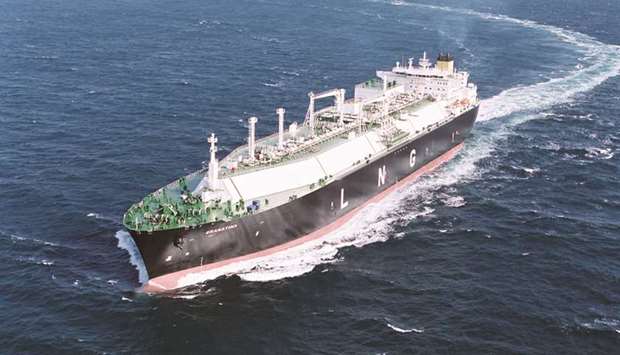
In the short term, the Swiss traders may prove useful to producers such as Royal Dutch Shell and Qatargas by finding new buyers in emerging markets and easing a glut in the market