


Mala Dangol recently had her second restaurant inaugurated in Doha and will continue to serve traditional Nepali cuisine to a variety of customers. She landed in Doha in 1993 as a child with her parents and set up her first restaurant in 2004.
Dangol has an undergraduate certification in business from Padma Kanya Campus – the only college for women in Kathmandu. Her two restaurants offer a variety of food with focus on traditional Nepali cuisines to provide the community real native taste thousands miles away from home.
Dangol’s restaurants are known in the Nepali community for cuisines such as bhat (steamed rice), dal (soup of lentils), achar (pickle), gundruk (dried and fermented greens), makai (corn), momo (dumpling), chhoila (water buffalo meat mixed with spices and grilled) and alutama (a vegetable soup of potato and fermented bamboo shoots), among others.
Community recently caught up with Dangol and interviewed her about her experience as a restaurant proprietor and an independent entrepreneur.
How and when did you start your first restaurant?
It was started in April 2004. When I set up my first restaurant, there were about 200,000 Nepalis living in Qatar. There was only one restaurant to serve them with traditional food. That was not enough. There was space for business.
I felt that one restaurant could not offer complete variety to the community. Furthermore, there was a dire need to introduce Nepali food to expats from other Asian countries. Recently we opened our new branch of Nepali Kitchen in Al Khor. Nepali Community Leader Bardi Pandey inaugurated the branch.
Do you focus solely on Nepalis?
Apart from Nepalis, we are also serving dishes from other Asian countries. One of the restaurants we are operating will focus on Thai food. We serve almost all traditional Nepali foods like bhat, dal, achar, gundruk (or, dried and fermented greens), makai, momo, chhoila and alutama (a vegetable soup of potato and fermented bamboo shoots), chicken curry, mutton curry and vegetable salad. Momo is very popular among other communities also. Momo is actually a Tibetan dish that has been adapted to Nepali tastes.
How’s the response being from your customers?
I think Nepalis overwhelmingly crave for their native food. Other nationals also love to taste our food every now and then. Though our cooks are specialist of Nepali food, we also serve Arabian, Indian, Chinese and continental food, if anyone is in the mood for them.
What are the most popular dishes among your Nepali clients?
Nepalis love dal, bhat and tarkari. They also order momo, chowmein and other Kathmandu-based foods. But, as we know, Nepalis come from different ethnic backgrounds and tend to order according to their tastes.
How profitable is restaurant business in Qatar? How many Nepali restaurants are there in Doha?
Nobody loses money in a restaurant business – you just have to be honest and dedicated to your customers. Our restaurants provide customised and cost-effective foods, so we attract a lot of customers. My guess is there are around a dozen Nepali restaurants in Doha and I think all of them are making profits.
Did you have any prior experience of cooking or owning a restaurant before you launched it here?
I came to Qatar in 1993 from Austria. I wanted to become a professional dancer but I could not. The idea of running a restaurant came to me as I slowly learnt how to cook and serve in a better way.
How do you get raw materials or ingredients for your food items? Are they available here or do you procure them from Nepal?
Raw materials are mostly available at Indian and Korean markets. Tama or bamboo shoots are available at Korean shops. Chiura (flattened rice), supari (beetle nut) and gundruk are available at Nepali shops.
Nepali food is slowly being popular worldwide. How do you define Nepali food?
Nepali food is as diverse as the community is. I can’t define them in very precise terms, but Nepali cuisines are shaped by ethnicity, altitude and climate. The diversity offered in Nepali food also attract people from other countries also.
Do Nepalis organise food festivals around Doha? Do you participate?
We participate in many community food festivals in Doha. Every year, food exhibitions are organised in Qatar Museum Garden and we participate in them.
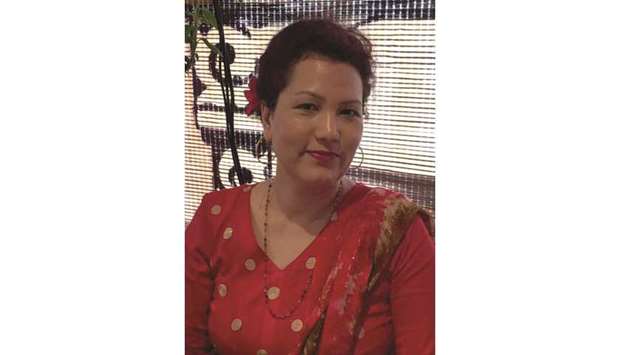
Mala Dangol, a successful Nepali restaurant proprietor in Doha.