


Hurricane Irma pummelled the north coast of Cuba yesterday, inflicting “significant damage” as millions of people in the US state of Florida hunkered down for a direct hit from the monster storm.
Irma’s blast through the Cuban coastline weakened the storm to a Category Three, but it is still packing 125mph (205kph) winds and was expected to regain power before hitting the Florida Keys early today, US forecasters said.
At least 25 people have been killed since Irma began its devastating march through the Caribbean as a Category Five storm of nearly unmatched power, making landfall late on Friday in Cuba on the Camaguey archipelago.
The Cuban government extended its maximum state of alert to three additional provinces, including Havana, amid fears of flooding in low-lying areas.
Terrified Cubans who rode out Irma in coastal towns reported “deafening” winds, uprooted trees and power lines, and blown rooftops.
In the seaside town of Caibarien, the storm knocked down walls and littered the streets with tree branches, roof tiles and other debris.
“What’s out there is terrible,” said Gisela Fernandez, a 42-year-old nurse.
After the storm whipped the town in Chapara in the province of Las Tunas on Friday, Gisela Fernandez described a fearful ordeal. “The rain is finishing, but all night long there were terrible winds.”
The governor of Camaguey province, Isabel Gonzalez Cardenas, said her area was “seriously affected” but there were no reports of casualties yet.
Cuban officials reported “significant damage”.
More than 1mn people evacuated from vulnerable areas in Cuba.
In Florida, cities on both the east and west coasts of the peninsular state took on the appearance of ghost towns, as nervous residents heeded insistent evacuation orders affecting 6.3mn people, nearly a third of the state’s population.
The storm’s forecast track has shifted slightly, so it now looks bound for Florida’s west Gulf coast instead of the Atlantic coast, with landfall expected this morning in the Florida Keys.
But Irma is so wide that authorities were bracing for destructive storm surges on both coasts and the Keys, the chain of low-lying islands that stretch south of Miami toward Cuba.
The storm smashed through a string of Caribbean islands, beginning with tiny Barbuda on Wednesday, followed by the holiday islands of Saint Barts and Saint Martin.
Also affected by Irma were the US Virgin Islands, Puerto Rico, the Dominican Republic, Haiti, and the Turks and Caicos.
The Bahamas were spared Irma’s worst.
French state-owned reinsurer CCR estimated Irma had caused €1.2bn ($1.4bn) worth of damage to homes, vehicles and businesses in the territories of Saint Martin and Saint Barts.
Meteorologists meanwhile were closely monitoring two other Atlantic storms.
Jose, another powerful Category 4 storm, was heading towards the same string of Caribbean islands Irma has pummelled in recent days.
The deteriorating weather grounded aircraft and prevented boats from bringing relief supplies to hard-hit islands.
Katia, which made landfall in eastern Mexico late on Friday as a Category One hurricane, had weakened yesterday to a tropical depression.
Mexico reported two people killed by mudslides unleashed by the heavy rains.
The US military was mobilising thousands of troops and deploying several large ships to aid with evacuations and humanitarian relief, as the Air Force removed scores of planes from the southern United States.
Meanwhile, the death toll from across the islands has continued to rise as reports come in.
Six were killed in the British Virgin Islands and Anguilla, including an elderly man crushed when his house collapsed.
Two were killed in Puerto Rico, and four more in the US Virgin Islands.
A child died in Barbuda, at least 10 in France’s Caribbean territories, and two more on the Dutch side of Saint Martin.
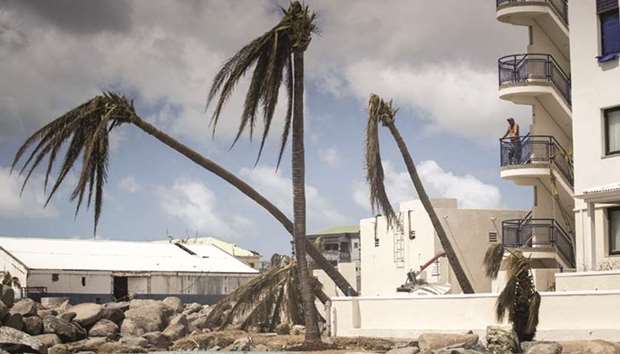
This handout photograph provided by the Dutch department of defence shows a man looking over the devastation of Hurricane Irma in Sint Maarten on Saint Martin island.