


At least 18,500 Rohingyas have crossed into Bangladesh since fighting erupted in Myanmar’s Rakhine state six days ago, the International Organisation for Migration said yesterday.
Plumes of smoke billowed from several burning villages in the worst-hit section of the state, according to an AFP reporter on a government-led trip to the area, as the violence showed little sign of abating despite security sweeps by Myanmar’s police and troops.
The streets of Maungdaw — northern Rakhine’s largest town — were virtually deserted as fires flickered among charred remains of houses and occasional burst of gunfire echoed in the distance. At least 110 people, including 11 state officials, have been confirmed dead since then and thousands of Rohingyas have poured across the border to Bangladesh despite Dhaka’s attempts to stop them.
“As of last night, 18,500 people have come across,” Chris Lom, the IOM’s Asia-Pacific spokesman, told AFP, adding an unknown number were still stuck on the Myanmar side of the border.
An estimated 6,000 Rohingyas on Tuesday massed at the “zero line” border with Bangladesh, days after the area came under mortar and machine gun fire by Myanmar security forces. The Rohingya, the world’s largest stateless minority and subject to severe restrictions on their movements, are barred from officially crossing.
Bangladeshi authorities yesterday toughened patrols in a bid to prevent more arrivals in a country that already hosts an estimated 400,000 Rohingyas, albeit in abject conditions. Rohingyas have sneaked across the land border in large number or swum the Naf River which marks part of the frontier. But tragedy befell some of them. The bodies of two Rohingya women and two children washed up on Bangladeshi soil yesterday, an official there told AFP, drowned after their rickety boat capsized. Scores more were found alive on the remote Bangladeshi island of St Martin’s, according to coastguards there, after taking a risky passage on barely seaworthy vessels.
Khadija Begum, a Rohingya woman from Rathedaung, was detained on arrival by Bangladeshi officials. “We thought it would be easier to face the sea than the (Myanmar) army,” she told AFP in tears.
With information trickling out, a picture has emerged of a cat-and-mouse game between insurgents and security forces played out in remote hamlets, fields and forest hideouts. The office of de facto leader Aung San Suu Kyi said militants have repeatedly detonated homemade explosives and tried to firebomb police posts and ambush patrols.
Myanmar classes the militants as “Bengali terrorists” and accuses them of setting fire both to Rohingya homes and those of other communities. Rohingyas arriving in Bangladesh have told a different story, saying their homes had been set on fire by police, troops and Buddhist mobs.
A Rohingya villager near the town of Maungdaw, speaking on condition of anonymity, said residents fled his hamlet as security forces approached and torched their homes. “Villagers are running away... where do we have to live now?” the villager said.
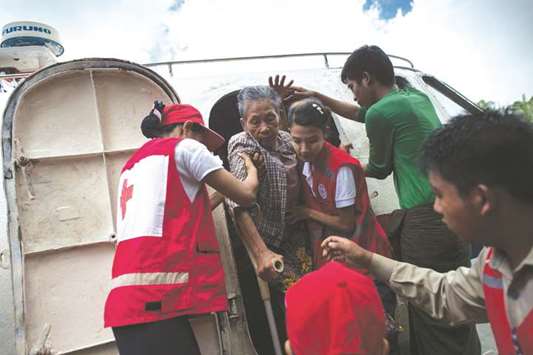
Members of Myanmar’s Red Cross help people fleeing a conflict area upon arriving in Sittwe jetty, in Rakhine state.