


Young students stand to benefit from a Weill Cornell Medicine – Qatar initiative aimed at changing unhealthy habits into healthy behaviours, and educate a generation about the importance of diet and exercise.
Children across the country will return to school with a passion for health through the campaign, a partnership between WCM-Q’s Sahtak Awalan – Your Health First and Qatar’s Ministry for Education and Higher Education’s Back-to-School programme.
Your Health First is distributing thousands of school bags, lunch boxes, water bottles, pencil cases and food information cards to young students at the Mall of Qatar over the Eid al-Adha period.
According to WCM-Q, the food cards explain the nutritional benefits of a wide variety of different foods, helping parents and young people to plan healthy meals and understand the benefits of the foods they are eating.
“If we can educate our children about health at a young age, they will take those lessons with them into later life. In that way, we can help create a healthy generation in the future who are able to meet the goals of Qatar National Vision 2030,” WCM-Q’s chief communications officer Nesreen al-Rifai said.
She thanked those who are supporting the campaign, particularly the Ministry of Education and Higher Education, and strategic partners Qatar Foundation, Ministry of Public Health, Occidental Petroleum Qatar and ExxonMobil.
“Obesity and related disorders are diseases from which we must do all we can to protect our children, but by working together we are making a real difference to the health of our most precious asset – our young people,” al-Rifai added.
Along with the nutrition cards, the water bottles will help ensure that the students returning to school stay well-hydrated throughout the day.
A magnetic food guide for the refrigerator will serve as a reminder at home about the importance of diet in staying fit and healthy.
WCM-Q and its Sahtak Awalan – Your Health First campaign has already done much to educate children about health, having installed greenhouses at public schools so the pupils could learn to grow and then eat their own fresh, organic fruit and vegetables, al-Rifai said.
“Once again, the project could not have been realised without collaboration with the Ministry of Education and Higher Education, and the backing of Sahtak Awalan’s strategic partners,” she said.
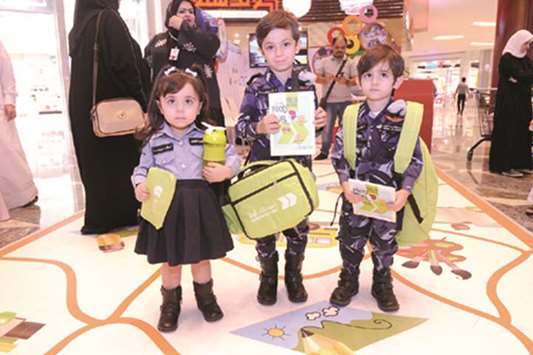
Young students showing their school bags, lunch boxes, water bottles, pencil cases and food information cards from the WCM-Q’s initiative.