


A key German political party would push for the sale of the government’s $38bn stakes in Deutsche Telekom and Deutsche Post in any coalition talks to form the next government with Angela Merkel’s Christian Democrat-led bloc.
The Free Democrats, a traditional king-maker in German politics that are in the run to rejoin the government after they crashed out of parliament in 2013, want to use the money to accelerate the build-out of high-speed internet lines in the country.
Improving digital infrastructure to help modernise the economy is a campaign pledge of the pro-market FDP.
“We need investments in fibre and copper while at the same time the government still holds shares in Deutsche Telekom and Deutsche Post,” Otto Fricke, a member of the FDP’s national leadership and a former budget committee chairman in the lower house of parliament, said in an interview.
“I’m curious how the CDU and Greens would behave when it comes to the question of selling the last shares and using the proceeds to advance especially fibre.”
An alliance between the FDP and Merkel’s Christian Democrat-led bloc — a realistic option based on the latest polls — could offer an opportunity to speed up the roll-out of fibre to the home, where Germany is lagging behind many of its European peers.
Selling the remaining shares of the former state-owned monopolies would provide “the necessary starting capital,” for adding a internet and wireless network offering “gigabit” speeds, the FDP says in its election manifesto.
Some of Merkel’s party colleagues are backing the plan. Carsten Linnemann, a CDU lawmaker who heads the party’s small and mid-size business caucus, said he’s “working on” making the idea resonate inside his party. Selling Deutsche Telekom shares “would be the right thing to do, but any sale has to be conditioned on funds to expand fibre-optic networks,” Linnemann said in an interview.
“We need more fibre-optic networks.”
It’s up to the government to decide what it wants to do with its Deutsche Telekom stake, Andreas Middel, a spokesman for the Bonn-based company, said by phone.
Deutsche Telekom says its efforts to improve and expand broadband networks are being overlooked. The company has added on average about 25,000km(15,500 miles) of fibre networks a year since 2010, and says that its vectoring technology, which increases speeds in existing copper-based infrastructure, is attractive because it can be deployed more quickly than fibre in rural regions
The federal government owns 31.8% of Deutsche Telekom, either directly or through the state-owned bank KfW Group, and 21% of Deutsche Post, according to the Finance Ministry’s 2016 holdings report, representing a market value of a combined €32bn ($38bn).
Polls suggest that an alliance between the pro-market FDP and Merkel’s bloc is within reach. Support for the Christian Union slid one percentage point to 39% in an FG Wahlen poll for ZDF television while backing for the FDP rose one point to 9%, giving them a combined 48%. FG Wahlen polled 1,283 people on August 22-24, with a margin of error of plus or minus 3 points.
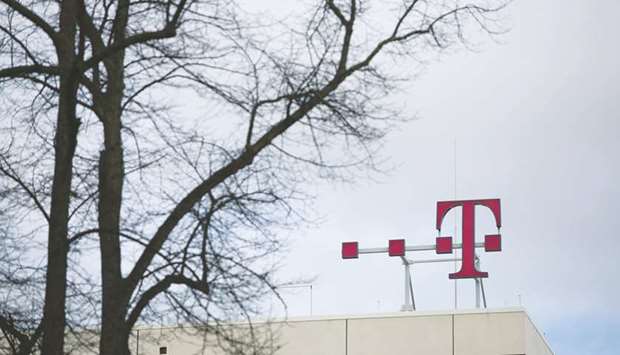
The T-Mobile logo is seen on top of the Deutsche Telekom headquarters in Bonn. u201cWe need investments in fibre and copper while at the same time the government still holds shares in Deutsche Telekom and Deutsche Post,u201d Otto Fricke, a member of the FDP’s national leadership and a former budget committee chairman in the lower house of parliament, said.